 Las Alpujarras - an inviting place to wander around the narrow village streets.
Las Alpujarras

Typical chimney pots from Las Alpujarras
The region of mountain villages known as Las Alpujarras clings to the southern flanks of the Sierra Nevada, cloven by deep, sheltered valleys and gorges which run down towards the Mediterranean. The Alpujarra, as it is popularly known, in the singular, is famous throughout Spain because of its unique mini-ecology. Its terraced farmlands are constantly watered by the melting snow from above, constituting a high-altitude oasis of greenery which stands in dramatic contrast to the arid foothills below. This is ideal hiking terrain for adventurous travellers, provided you take along a tent and well-padded sleeping bags - the average altitude is 4,000 feet above sea level.
The cultural interest of the region lies in its fifty-odd villages, many of which were the last area of Iberia to be the settlems of the Moors. The Catholic Monarchs completed the reconquest of Iberia woith the siege of Granada in 1492. The last Nasrid ruler, Boabdil, was exiled to the Alpujarras. Over the next fifty years increasing pressure from the Christians Kings led to a bloody uprising, the Moorish Rebellion of 1568, which was ruthlessly crushed. Soon followed a royal decree expelling all Muslems from the Kingdom of Granada. The villages of the Alpujarra were resettled with some 12,000 Christian families brought by King Philip II from Galicia and Asturias in north-western Spain.
Self Catering accommodation
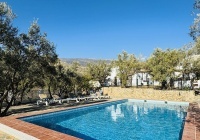
Characterful Andalucian farmhouse in the Alpujarras with six bedrooms, set in tranquil grounds with pool, enjoying a rural mountain location yet close to local amenities.

Great location in Bubion village in the high Alpujarra. A spacious, quality home with breathtaking views. Good restoration work and thoughtful interior design have created a very comfortable home. WiFi internet. Sleeps 2 to 6.
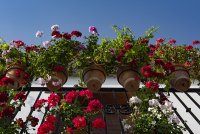
Quality villas and holiday cottages in La Alpujarra and other magical locations of Spain.
These unique hamlets have retained their traditional Moorish architecture - terraced clusters of grey-white box-shaped houses with flat clay roofs - which is still common in the Rif and Atlas mountains of Morocco. Perhaps the most picturesque villages are the famous trio which cling, one close above the other, to the slopes of the Poqueira Valley, where red peppers and tomatoes are still set out to dry on the flat clay roofs, among the tall round chimney pots. Pampaneira, at the bottom, bustles with crafts shops and restaurants, as does Bubión, half way up the slope, with its massive square church tower standing on a plaza of rough paving stones. But to savour the authentic Alpujarra, go to Capileira, the highest - the name is an Arabic derivation of the Latin word for head or top - and walk down from the road into the lower streets of the village, where the rocky streets, overhanging passageways and sagging, stone houses have still not been remodelled and prettified for contemporary living.
If you stray from the beaten path, you will be sure to catch sight of the region´s abundant wild life, such as the Cabra Hispanica, a mountain goat which roams the mountains in herds and is often seen standing on pinnacles, silhouetted against the sky. But as soon as it flairs the scent of man it will bound up the steepest slopes with amazing speed... The Alpujarra is also famous for its excellent birdwatching - the colourful Hoopoe with its stark, haunting cry, is a common sight.
The capital of the Alpujjaras is the town of Órgiva, located in the fertile valley of the Guadalfeo River. Órgiva at an altitude of 450m enjoys a milder climate than many other places and is surrounded by olive, lemon and orange groves.
A popular driving route enjoyed by visitors from Granada or the coast starts at Langaron or Órgiva respectively and follows the A-4132 eastwards as far as the village of Trevélez. Its only a 38km drive but including stop will take a day. Trevelez - famous throughout Spain for its superb air-cured mountain hams, or jamón serrano - at 1.476m is one of the highest villages in Spain, overhanging a fast-flowing river and plunging mountain valley.
 The stunning rural landscape of the Alpujarras
South from Granada
One of the many great travel books written about Spain is devoted to the Alpujarra - Gerald Brenan wrote South From Granada, which recounts the adventures of a young Britisher who, after serving in World War I, walked through Andalucia in search of a cheap place to live and write. He discovered the tiny village of Yégen, where he rebuilt a ruined house (now marked with a plaque in his memory) and lodged some of his friends of the famous Bloomsbury group of London. In his book - written in retrospect, long after he became a well-known journalist - Brenan describes the difficulties of getting such highly-strung aesthetes as Virginia Woolf and Lytton Strachey up the river gorges on mule back, as well as his bucolic existence among the local peasants.
Buy your copy of South from Granada
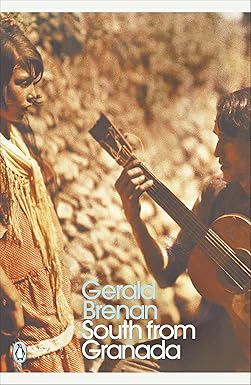
Part autobiography, part travelogue, and wholly a tribute to the unspoilt beauty of southern Spain, Gerald Brenan's South from Granada includes an introduction by Chris Stewart, author of the bestselling Driving Over Lemons, in Penguin Modern Classics. Between 1920 and 1934, Gerald Brenan lived in the remote Spanish village of Yegen and South of Granada depicts his time there, vividly evoking the essence of his rural surroundings and the Spanish way of life before the Civil War.
Buy from Amazon.co.uk or Amazon.es
Villages of Las Alpujarras
Located in the fertile valley of the Guadalfeo River, Órgiva is the largest town in the western Alpujarras. At an altitude of 450m, Órgiva enjoys a milder climate than many other places in the… More →
El Golco was fused in 1973 with Yegen, Mecina Bombarón and La Cortijada de Montenegro to form the municipal district of Alpujarra de la Sierra.
Mecina Bombarón was fused in 1973 with Yegen, El Golco and La Cortijada de Montenegro to form the municipal district of Alpujarra de la Sierra.
Castillejo de Poqueira was the Poqueira area's defensive castle and watchtower, offering impressive views of the entire region.
From a historical and artistic point of view, the church tower is the most interesting building. Built in the mid-eighteenth century, it contains a cemetery.
La Tahá-Pitres was part of the Tahá de Ferreira, one of 14 areas established during the Nasrid occupation — the Moorish dynasty that built the Alhambra.
The age of the Roman bridge of Fondales is unknown. However, its design appears to date back to the Islamic period of the 12th or 13th century.
The church dates from the sixteenth century, has a rectangular nave with some side chapels and a main chapel differentiated by a triumphal arch.
La Tahá-Pitres was part of the Tahá de Ferreira, one of 14 areas established during the Nasrid occupation — the Moorish dynasty that built the Alhambra.
La Tahá-Pitres was part of the Tahá de Ferreira, one of 14 areas established during the Nasrid occupation — the Moorish dynasty that built the Alhambra.
La Tahá was part of the Tahá de Ferreira, one of 14 areas established during the Nasrid occupation — the Moorish dynasty that built the Alhambra.
Laroles is the largest of four villages that make up the municipal district of Nevada. It sits in between the rivers Bayárcal and La Ragua and is surrounded by lush chestnut groves.
Ugíjar consists of five areas: Ugíjar, Cherín, Jorairátar, Los Montoros and Las Canteras. Granada poet Pedro Antonio de Alarcón once described Ugíjar as “aristocrática” (aristocratic). In Ugíjar,… More →
Turón is a mountain village where visitors can enjoy rich gastronomy as well as cultural activities, and spectacular scenery. The origins of the village are in the Roman era; however, Neolithic… More →
Torvizcón is the largest town in the Contraviesa, the part of the Alpujarras between the Sierra Nevada and the sea. The village’s traditional whitewashed houses are silhouetted against the Sierra… More →
Sorvilán has a privileged location, nestled between la Sierra de la Contraviesa and the Mediterranean Sea, making it the perfect destination for lovers of rural tourism as well as for those… More →
This village, located in the Sierra Nevada National Park, has an important factor which distinguishes it from all the other Alpujarra villages: its altitude. This factor allows visitors to enjoy… More →
Pórtugos is truly a gift from nature: the village is the source of natural mineral waters with a high iron content; red in colour, they descend in a waterfall called La Fuente Agria. This waters… More →
Nevada is the highest and most easterly peak in the Alpujarra and boasts stunning natural landscapes. Here, you’ll have the opportunity to see wild goats, which are one of the animals that best… More →
Situated at an altitude of over 1,500 metres, Murtas is one of the best vantage points for viewing the whole area, from the peaks of the Sierra Nevada to the Mediterranean coast.
Lobras is a small village with its distinctive own personality. It feels as if time has stood still when you walk along its streets and visit its monuments. The location also means that visitors… More →
The area of La Tahá was part of the Taha de Ferreira, one of 14 such areas established during the Nasrid occupation (they were the Moorish dynasty who built the Alhambra). The tahas were… More →
Situated among chestnut forests, in the highest region of the Alpujarra, Juviles is a small village with links to the past and an air of tranquillity. The most important archaeological remains… More →
Visitors to Cástaras might think that time has stood still. Its privileged location offers impressive panoramic views of the Alpujarras. The village has a population of around 250.
Visitors looking for tranquillity and the opportunity to relax for a few days will find that Carataunas is the perfect destination.
This village, located in the Alpujarra region, is home to some beautiful natural monuments. The village itself has kept the Arabic influence alive, with narrow streets, whitewashed houses and flat… More →
Cádiar is a completely mountainous village that has preserved it´s Morisco feel and character. It was formed by three neighbourhoods: Cádiar, Narila and Yátor, and is situated between Sierra… More →
Busquístar is located in a privileged natural environment, next to the ravine formed by the Trévelez River and inside the Sierra Nevada national park. It was previously known as el paraíso… More →
The town of Bérchules is made up of two smaller areas: Bérchules and Alcútar. The village largely consists of working orchards and is served by many different water sources.
It seems as if time has stood still in Almegíjar, where the streets remain much as they were during the Muslim dynasty when the village was first established.
This village in Granada province has a lot to offer visitors. It is the perfect place to enjoy nature, a rich cultural history and the Mediterranean Sea, which is less than 20km away. The origins… More →
Most well-known for its mouth-watering cured ham, jamón serrano, the village of Trevélez is the highest in mainland Spain, at 1,476m. Its clear mountain air is ideal for drying the sweet-tasting… More →
Bubión sits halfway between Capileira and Pampaneira in the Poqueira gorge, surrounded by magnificent views of the often, snow-capped Sierra Nevada peaks and the Alpujarras.
Capileira, at 1,436 metres, is the highest of the three villages in the Barranco de Poqueira and an ideal base for walking in the gorge or up to the peaks of the Sierra Nevada.
Lanjarón is the first town you come to in the western Alpujarras and is considered the gateway to the region. The town is famous for its mineral water, which is sold throughout Spain.
One of a trio of popular and picturesque whitewashed villages, Pampaneira – like its neighbours Bubión and Capileira – hugs the steep slopes of a lush river gorge, the Barranco de Poqueira.… More →
The village's Moros y los Cristianos, a popular festival dating from the 16th century, is one of the most famous in Spain. As one of the last regio ns to harbour the Moors, the Alpujarras is one… More →
The British writer Gerald Brenan immortalised Yegen in his book South from Granada, published in 1957. Today, you can see his former house, marked by a plaque, just off the main square, while… More →
The village of Alpujarra de la Sierra is a must-see destination for students of the life and work of Gerald Brenan. The Hispanics writer originally from England, lived in the Yegen area of the… More →
Self Catering accommodation
Characterful Andalucian farmhouse in the Alpujarras with six bedrooms, set in tranquil grounds with pool, enjoying a rural mountain location yet close to local amenities.
Great location in Bubion village in the high Alpujarra. A spacious, quality home with breathtaking views. Good restoration work and thoughtful interior design have created a very comfortable home. WiFi internet. Sleeps 2 to 6.
Quality villas and holiday cottages in La Alpujarra and other magical locations of Spain.
Book Hotels in Las Alpujarras


