Jaén

Iglesia de San Bartolomé

The small church is of medieval origin, being erected as a parish in the fourteenth century and built between the sixteenth and eighteenth centuries. A space with a steep slope that is softened by stone “cantons”, being delimited by a series of stately buildings of which there are still vestiges and among which the, Casa del Conde de Águila, stands out, better known as the “House of fear”.

Iglesia de San Juan y Torre del Concejo

It is one of the first temples in Jaén, as it dates from the second half of the fourteenth century, and was built on a mosque; proof of this is the existence of the remains of a Muslim minaret on Calle Martínez Molina.

Monasterio de Santa Teresa de Jesús

In the chronicles about this Convent it tells us about Francisco Ullua Palomino and his wife, Doña Luisa de Quesada y Valenzuela. His Christian piety was not content with having given a son and three daughters they had to the Order, they decided to give a good part of their property, founding a Convent of nuns.

Paseo de la Estación

The Paseo is a long and straight avenue that runs north from the historic and monumental center of the city. It begins in the Plaza de la Constitución, one of the liveliest places in the city, and ends in the Plaza Jaén por la Paz, approximately 1.4 km away, where the railway station is located.

Pilar de Arrabalejo

The public fountain is situated next to one of the eight gates of the Santa Catalina Castle wall. Its design and construction is attributed to Alonso Barba, of clear Renaissance aesthetics and remarkable height, it is composed of a total of two bodies and a coronation attic.

Monumento al Lagarto de Jaén

The monument is of a lizard, being the most famous legend of the capital. The saying goes: “Hopefully you will burst like the Lizard of Jaén”. There are a few versions of the legend however it is thought the lizard lived in the fountain of Magdalena and went out to kill people and animals. A shepherd killed the lizard using as bait a bloody lamb skin filled with burning tinder that, when swallowed, hugged the entrails of the lizard and made it burst. In memory of the shepherd a scene has been painted in the same fountain of the Magdalena. Therefore, when someone eats a lot, they are told that “he is going to burst like the lizard of Jaén”. There is a similar legend in Córdoba and Valencia. Located on Calle Santo Domingo.

Ermita y Vía Crucis del Calvario

At the top of Cerro del Calvario stands the hermitage, a rectangular building measuring 16x7.3 meters. The origins of this ordeal are difficult to pin down: its oldest references are from the mid-eighteenth century. In 1999 it was demolished, and it was built again that same year. Little way to south

Cámara Obscura de Capuchinos

The Capuchinos Dark Chamber was installed in one of the towers of the Alameda auditorium, intended to recover the view offered by the old Capuchin viewpoint. Its location is considered the ideal one for contemplating the olive-growing countryside of Jaén, to have fantastic views of the monuments of the city, as well as to observe the wonderful nature that surrounds the city.

Palacio de los Vilches

The Palacio de los Vilches is a Renaissance palace from the sixteenth century with a corner facade of six semicircular arches supported on eight Doric columns; among them busts of heroes of antiquity.

Infanta Cristina

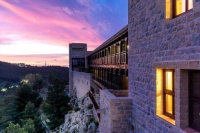
Hotel Infanta Cristina is set in a new residential area of Jaen, near El Corte Inglés and the University. The hotel offers an outdoor swimming pool, gym and free Wi-Fi.This elegant hotel offers spacious, modern rooms with a private balcony. Rooms are all air conditioned, with satellite TV and a minibar.

HO Ciudad de Jaén

This 4-star hotel is located at the entrance of Jaén, perfectly located by the Bailen-Motril Motorway.
HO Ciudad de Jaén offers luxurious air-conditioned rooms with a private terrace and city views. Each one comes with free WiFi, a safe, a minibar, a flat-screen TV and a private bathroom.

Balneario San Andrés, Jaen

Jaen is in the north east of Andalucia and tourists do not often visit Jaen. The mood of the city is more somber than other Andalucian towns, but the Cathedral is well worth a visit.

Jaen City - Transport

The bus station is on Plaza de Coca de la Pinera, 250m north of Plaza de la Constitucion. Alsina Graells runs 11 or more daily buses to Granada, seven or more to Baez and Ubeda and two to Cazorla. The Urena line travels up to eight times daily to Cordoba and three times daily to Seville. Other buses are for Guadix, Malaga, Almeria, Madrid, Valencia and Barcelona.

Jaen City - Gastronomy

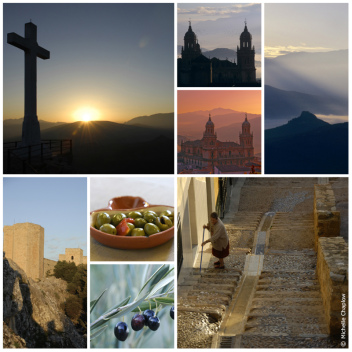
Jienense, as the locals are known, have a cuisine all their own – at least from their point of view. To the outsider, the menus of the day in Jaen will probably look very similar to those of any other town or village in Andalucia. To the insider, however – whether from Jaen or the rest of Andalucia – many dishes do offer a unique touch.