Teatro Romano Málaga
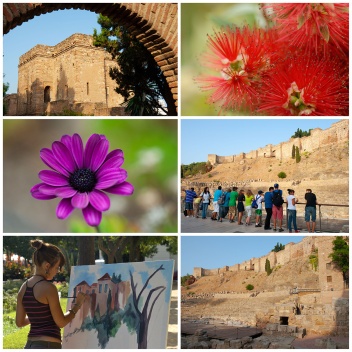
El Teatro Romano is the oldest monument in Málaga City, it is situated in the cultural heart of Málaga city, at the foot of the famous Alcazaba fortress.
Fish, meat, cheese, and fruit and vegetables: all fantastically fresh and at the best prices. If you enter the market with you eyes at street level, they will certainly raise to gaze in marvel at the stained glass window fit for any cathedral.
El Jardín Del Retiro is a botanical-ornithological garden situated in Churriana, just outside Málaga city centre. The estate is almost 350 years old. It spans a huge 140,000 m2 and contains around 6,000 animals of 400 different species, including birds, reptiles, mammals and fish, in both freshwater and saltwater ponds. It has been called one of the most beautiful gardens in all of Spain.
La Malagueta itself was built in 1874, by the architect Joaquín Rucoba. The first fight took place on 11th June 1876, and the matadors who fought were Rafael Molina, Antonio Carmona, Luque El Gordito, and Manuel Rodriguez. A century later in 1976 the site was declared an Historic Artistic Monument, and in 1981, it was declared an Official Site of Cultural Interest.
Information about the city of Malaga in Andalucia, southern Spain. Cinemas and Multicines in the city of Malaga.
La Alcazaba is Malaga's most important landmark, and overlooks the city from a hilltop inland. It is one of two Moorish fortresses in the city, the other being the Castillo de Gibralfaro, situated above. The Alcazaba is the best-preserved Moorish fortress palace in Spain. It received about 1 million visitors in 2016.
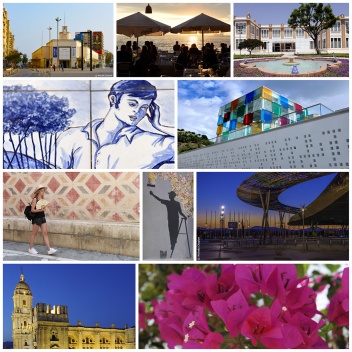
The seductive climes of Málaga in the southernmost part of Spain guarantees fun and frolics. With an emerging food scene and overlooked cultural gems, this elegant and surprising city has something for everyone.
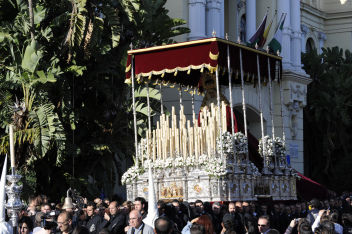
Here is a guide to the traditional festival that take place in Malaga city each year. We also link to a monthly What's On! guide for Malaga city.
Malaga City has much to offer a tourist, not only is it the cosmopolitan capital of the Costa del Sol it also has kilometres of beautiful sandy beaches. The beaches are all situated along the Promenade of Pablo Ruiz Picasso which is lined with bars and restaurants where you can sample Malagueño produce and culture at its best.
Right in the heart of the Historic Centre of Malaga is the most wonderful antidote to those long days of sightseeing and busy shopping – ‘El Hamman’ or ‘baño magico’.
Shopping in Málaga is a fascinating mix of the old and the new. Years ago shopping for the malagueños was a fairly parochial, low-key affair but economic booms and the increase in tourism, has resulted in more contemporary and chic shopping options, including international chains and shopping malls.
Sports is Big Business in Spain, as we are all frequently reminded with a quick look at the news; it´s not just the likes of Nadal, and Casillas that like to keep in shape. Along with Football and Tennis; Basketball, Swimming, Cycling and Athletics are all equally popular in Andalucia as in the rest of the country.
Boasting some of the best restaurants in Spain, Malaga attracts diners from all over the Costa del Sol. Whether it is tapas bars, fine dining restaurants, fast food or excellent fresh fish you are after, you will find it here. Many Malaga restaurants are situated in old houses with courtyards and patios, to create a unique dining experience.
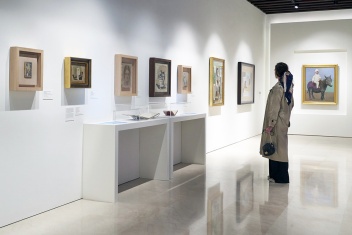
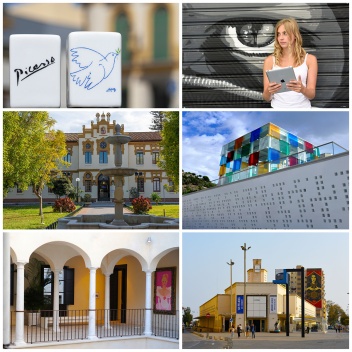
Main sights in Malaga city centre include the cathedral and several churches, each with its own distinctive style. Malaga is now a city of over 30 museums headlined by the Picasso Museum and the Carmen Thyssen Museum.
Whether you like wine, archaeology or cars; you’re interested in glass, contemporary art or 19th century painting, you’re sure to find at least one museum which will interest you in the city. Most visitors to Malaga go to the Picasso museum and his birth house, as the painter is the most famous son of the city. There is also a first rate art museum now which focuses on Andalucian art – the Museo Carmen Thyssen.
No Andalucian city is complete without its mighty Moorish fortress. Malaga´s Alcazaba is one of the mightiest and most extensive, and dates from the eighth century. It overlooks the recently restored Roman Amphitheatre just below, illustrating the city´s rich history. You can continue following the city´s fortunes over the centuries inside the Alcazabar, in the Archeological Museum, which houses Phoenician, Roman and Moorish artefacts.
The people of Malaga are proud of the fact that Picasso was born here and it was a big day when the King and Queen of Spain inaugurated the Museo Picasso (Picasso Museum) on the 27th October 2003. On that first day alone almost 2,000 people visited. the museum, which is housed in the Palacio de Buenavista.
Tourist Offices in Malaga City are Municipal Central, Centro de Recepción de Visitantes Ben Gabirol, Alcazaba, Malaga Airport, Terminal Portuaria, Pasaje de Chinitas.
Malaga´s astonishing reinvention of itself, from stopping-off point for beachgoers to artistic mecca of southern Spain, has been triggered by the Picasso museum and followed up by the Centro de Arte Contemporaneo (CAC) de Malaga, Malaga´s Tate Modern. This has temporary exhibitions by cutting-edge international artists, such as Louise Bourgeois and Robert Mapplethorpe, as well as showing both up-and-coming and established Spanish artists (Chema Cobo), and a permanent collection.
The English Cemetery in Malaga holds the distinction of being the oldest Protestant cemetery on mainland Spain. This garden cemetery offers a glimpse into the lives of past residents, including notable figures from Málaga's history.