Latest Pages

Latest pages

We are committed to updating our pages as regularly as possible, allocating over half of our editorial resources to this essential task, to ensure that you can always find the latest, most reliable information on popular topics and places.

Here is a list with the latest pages that have been updated or created. Most recent are at the top of the list.
Cordoba City

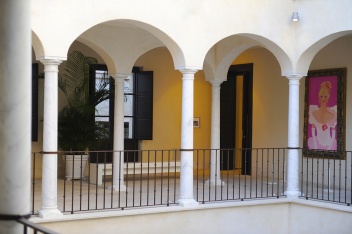
Cordoba was founded by the Romans and due to its strategic importance as the highest navigable point of the Guadalquivir River, it became a port city of great importance, used for shipping Spanish olive oil, wine and wheat back to Ancient Rome. The Romans built the mighty bridge crossing the river, now called "El Puente Romano".

Sierra Maria-Los Velez Natural Park

Designated a natural park in 1987, the Sierra María-Los Vélez occupies the eastern end of the Cordillera Subbética in the north of Almeria province. It covers 22,670ha, a landscape of impressive contrasts, with its arid, moon-like plains overlooked by the Sierra's rocky summits, which are white with snow in winter, and the dry, barren south-facing slopes compared to its densely wooded north-facing ones.

History of Vélez Rubio

The town’s current location dates from the late fifteenth century and is due to the abandonment of the old city located on a hill to the south called Castellón. Although no specific Upper Paleolithic sites have been found, the settlement of this area has been known since this time. From the Neolithic period there is the Cerro de Los López site, with the existence of cabins, pottery and tools.

El Andevalo

El Andévalo is the name of a 'comarca' (region or area) in the west of the province of Huelva. It is made up from 14 municipal districts and even more small villages.

Los Pedroches Valley

Visitors will notice that the most characteristic element of the Los Pedroches landscape are the holm oak trees. The majority of these villages are small and sparsely populated who have fought to conserve their heritage and traditions. Some form part of the Ruta de los Castillos, including Belalcázar, with the Castillo de Sotomayor; Santa Eufemia, with the medieval fortress at Miramontes; and El Viso, with the Madroñiz fortress.

Iglesia de la Encarnación

The church is an important architectural example of the final evolution from Baroque to Neoclassical. The Baroque architectural elements predominate over other decorative details from later times.

María

María forms part of the Parque Natural Sierra de María-Los Vélez and is one of the area’s greatest attractions. It has an interesting archaeological heritage, especially present in the cave paintings in Cueva de Haza and the Iberian population at El Pasico. It has about 1200 inhabitants.

River Nacimiento Valley

There are five municipal districts in the Rio Nacimiento Valley and one has the same name as the river. The highway form Almeria to Guadix climbs this valley. One municipality is unusual in that it is not the name of a village. This is called Las tres Villas (three villages) and was created in 1976 combining the hamlets of Ocaña, Doña María and Escúllar.

Festivals in Vélez Rubio

Festivals in Vélez Rubio: Cabalgata Reyes Magos, Carnaval, Día de andalucía, Día de San José, Entierro de la Sardina, Semana Santa, Fiestas del Carmen and Fiestas de Agosto.

Cueva de los Letreros, Velez Rubio

The prehistoric cave paintings of the Cueva de los Letreros are spectacular, they can be found 3km out of the town of Velez Rubio. To get to the caves follow the A317 north until you reach a petrol station on the left, next to which is a signed turning to the cave.

Ermita de Nuestro Padre Jesús Nazareno

A mosque from the Nasrid period (twelfth to thirteenth centuries) consecrated to Christian worship in 1489, first as Ermita de Santiago and later as Ermita de Nuestro Padre Jesús Nazareno. It is the only Almohad enclosure in Spain that, despite the time and aggressions endured, preserves the oratory with its quibla and part of the ornamentation that now decorates the doorway of the mirhab.

Grabados Rupestres de Piedras Blancas

Rock engraving on the southern slope of the Sierra de los Filabres, at an altitude of 1,400m. It is the representation of a complete figure of a horse, in absolute profile and with a slightly ascending position, from back to front. Its conventions place us in the middle of the Upper Paleolithic era, corresponding to the Solutrean stage.

Tourist Office in Vélez Rubio

The Tourist Office of Vélez Rubio is located in the Miguel Guirao Archaeological Museum, opening from Monday to Friday.

Anunciación church of Las Tres Villas

Construction of the church began at the end of the eighteenth century, according to the plan drawn up by the architect Santiago Ferro, although only the main chapel and the transept were built from it, as the nave was never built.

Iglesia Parroquial de Nuestra Señora de la Encarnación

According to an inscription, the church was finished on February 20, 1557, under the reign of Felipe II and the second Marquis de los Vélez, Luis Fajardo. It is of Mudejar style, and consists of the eighteenth-century Rosario chapel, a sundial and pine wood doors with forged rivets and knockers.

Los Velez

Tucked away in the little-visited northern corner of the province is the Sierra María-Los Vélez Natural Park, a surprisingly extensive wooded area, given the otherwise arid aspect of Almeria´s territory, where there are some superb walks. The two main towns in the park - Vélez Rubio and Vélez Blanco - are well worth a visit, particularly the latter for its original castle and Cueva de los Letreros with prehistoric rock paintings.

Iglesia de Nuestra Señora del Carmen

The church can be considered the oldest building in the town, which was an important milestone within its heritage, at the same time that it was a great economic effort, since it was paid for by the Hermandad del Carmen (Brotherhood).

Hotels

Lovers of rural tourism will find a variety of accommodation opportunities including hotels, rentals and camping. Hiking is a popular activity as the natural park provides some lovely signed routes to take, such as the Solana del Maimón, that goes from Vélez-Rubio to Vélez Blanco.

Balneario Sierra Alhamilla, Almeria

The wonderful 18th century two-storey building, which now houses the Sierra Alhamilla Balneario (Spa), was restored from ruins in 1984 by Isidro Perez. Originally built on Roman and Arabic ruins, it took 8 years of painstaking work to bring it back to its original historic beauty and retaining its authentic medieval atmosphere.