Latest Pages

Latest pages

We are committed to updating our pages as regularly as possible, allocating over half of our editorial resources to this essential task, to ensure that you can always find the latest, most reliable information on popular topics and places.

Here is a list with the latest pages that have been updated or created. Most recent are at the top of the list.
La Isleta del Moro

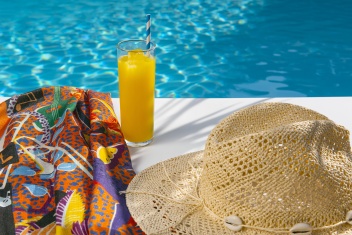
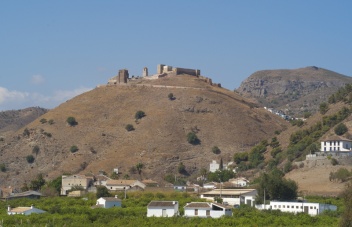
La Isleta del Moro is a quaint fishing hamlet known for its picturesque setting, and well worth the 500m detour from the AL-4200 San Jose to Las Negras coast road.Population is about 200. The name comes from Isleta del Moro Arraez, possibly from a Moorish commander called Mohamed Arraez (ar-rais means boat owner). Straddling a narrow peninsula, between two small hills, the hamlet offers a very photogenic coastal scene.

Festivals

Popular festivals in Dúrcal are Cabalgata Reyes Magos, Festividad de San Sebastián, Semana Santa, Real Feria de Ganado y Fiestas Populares and Feria Agroalimentaria, del Turismo y la Artesanía del Valle de Lecrín, Temple y Costa Interior.

Sport

Golf Estepona Golf club: Located a few km west of the town. More information on Estepona golf. Tennis Estepona Tennis Club: Located in the Forrest Hills urbanisation. Tennis courts are available for hire at the Municipal Sports Stadium, Avenida Santo Tomás and the La Viña Municipal Sports Centre at Calle Alcalá Galiano, s/n. Boating & Water Sports Centre.

Stop-Smoking

If you are a smoker, beware that your family doctor in Andalucia has an eye out for you! As part of the stop-smoking programme in this part of Spain, doctors at local clinics are supposed to ask all new patients whether they smoke in order to ensure that smokers are informed regarding the risks involved in continuing their habit and the benefits of stopping now.

Arjonilla

Arjonilla is situated on the far western side of the province of Jaén, surrounded by olive groves. Indeed, it sits in the heart of a region well known for olive oil production. The area is also rich in archaeological remains. Arjonilla has about 3,570 inhabitants.

Fascinating Facts

Do you want to find out some little-known interesting facts about Andalucia’s most famous towns, cities and pastimes? Which films were shot in Seville, why the Mezquita was built with its pillared arches, which Beatle loved Almeria, who brought golf to Andalucia?

Marbella Tourist Train

Marbella has a family friendly tren turistico (tourist train) that runs all year round. It travels around the principal sights of the town taking about 25 minutes.

Iglesia Parroquial de San Luis de Francia

Construction of the church began on 12 June 1735 with the laying of the foundation stone. The townspeople chose to name the church after the Santísimo Cristo de la Salud and the town's patron saint, Louis IX, King of France.

Maps of Nerja

If you are considering visiting Nerja you may find our maps a useful tool, we provide three maps, one of the region of Andalucia with Nerja highlighted. The second handcrafted map gives the location of Nerja with the corresponding local road network. In order to help our readers we have also embedded a Google map which is centered on Nerja.

Translators

Every year Andalucía welcomes thousands of tourists, business people and new residents from other countries. Although many have a good understanding of the Spanish language, at one time or another they will usually all need the services of either a translator, who converts the written word of one language into another, or an interpreter who does the same with the spoken word.

Torre Nazarí

The Nazarí Tower of Santa Fe de Mondújar dates to somewhere between the thirteenth and fifteenth centuries. It is a fortress tower or watchtower built for surveillance of the territory and defense from enemy attacks.

Ponies and Players

The polo pony ranges from 14.2-16 hands (147-163cm) in height and is usually either thoroughbred or thoroughbred crosses. Polo ponies are selected carefully for their ability to move in quick bursts of speed, and their great stamina, agility and manoeuvrability. It is vital that the horse remains responsive under pressure and does not become excited or difficult to control.

Puente Romano

The age of the Roman bridge of Fondales is unknown. However, its design appears to date back to the Islamic period of the 12th or 13th century.

Convento de Santo Domingo, Ronda

Built on Arabic foundations at the instigation of the Reyes Catolicos after the fall of Ronda in 1485, this imposing structure on the far side of the Puente Nuevo has been rebuilt over the centuries in Mudejar (post-Reconquest Arabic), gothic and Renaissance styles. It has been, variously, a Dominican convent, a private mausoleum for the Moctezuma y Rojas family and, sporadically, a tribunal for the Inquisition.

Non-EU Driving Licences

EU citizens are allowed to use their home country drivers' licenses whilst a tourist in Spain. If you are living in Spain and use your home country drivers' licenses you may be asked to document your absence from Spain in the last six months or face a fine of 300 euros. If you are driving a vehicle you own on Spanish registration you must also carry some form of Spanish language license.

Iglesia de la Encarnación

The church was designed according to the Gothic lexicography of the early sixteenth century. Its plan consists of three naves, separated by cruciform pillars, covered with a Mudejar roof that, in the eighteenth century, was camouflaged with false ribbed vaults.

Comares - Castle

The castle of Comares is of Arab origin, it was built in turn on an old Roman fortress. The remains of the fortress are popularly called "La Tahona" (a  bakery or mill )  and from the top you can see a wonderful general view of the town, which seems suspended in a rock, as well as the impressive massif of Sierra Tejeda to the north and the sea to the south . In fact, Comares is called the Balcón de la Axarquía malagueña.

Valentin de Madariaga

Valentin is a world-famous architect and president of the Fundacion Valentin de Madariaga y Oya. Born in Seville in 1960, he lived in his native city until the age of 18, when he moved to Madrid to study architecture. After university Valentin remained true to his Andalucian roots, working in Malaga, Cadiz and Seville.

Book your stay in Andalucia Now!