Parks & Gardens in Cordoba city
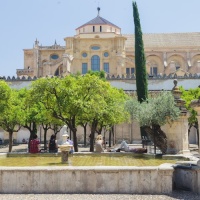
Parks and Gardens in Córdoba city: Patio of the Mosque, Alcázar, Patio de Viana, Botanical Garden and more.
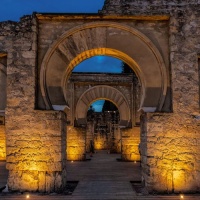
Cordoba is best known as being home to one of Andalucia's three great monuments: the Mezquita, the other two being Seville's Alcazar and Granada's Alhambra. Like the other two, the city embodies the region's rich cultural and religious history: the Mezquita - which dates from Cordoba's zenith, as capital of Al-Andalus and the largest and most important city in Western Europe, with 500,000 inhabitants.
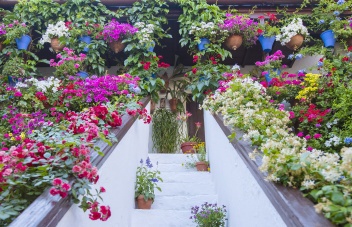
The Patio contests is sponsored by the Córdoba City Hall and began in 1918. But to really understand why a contest of this type was created in Córdoba you must know something about the local architecture.
This recently created museum is located at the 15th century Episcopal Palace, and is a beautiful building with a cloister of several storeys, a chapel and dining-room, as well as a hall dedicated to artists from Cordoba and a gallery dedicated to mediaeval art, as well as tapestries and collections of psalm books from the Cathedral.
Before the 18th century's "enlightened" philosophers existed, with their humanistic ideas, there was no ideological precedent which made a virtue of tolerance and respect for other beliefs than one's own - something which is all too often forgotten in our guilt-ridden, altruistically-minded times. Medieval people, of all religions, were alternately fanatical and pragmatic, as the situation demanded, but never broad-minded in the liberal, relativist sense of the word. Such a thing was impossible in the Middle Ages, simply because the idea that there could be more than one "truth" did not exist. Equality, as conceived at the time of the French Revolution, is above all a political convention, not a biological fact.
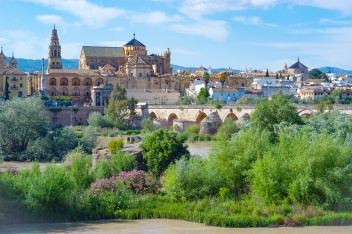
See more about Córdoba city.
There is a modern bus station opposite the RENFE railway station. The bus station itself has become one of the emblematic buildings of Córdoba. The building wone the National Prize for Architecture in 1999 when it was built was built by César Portela. In the car park travellers can observe remains of a Mozarabic house, the junction of two aqueducts and a mosque with Roman ashlars.
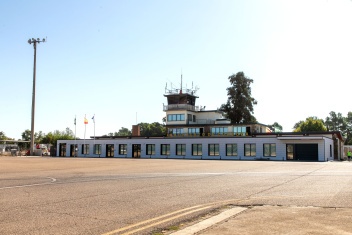
There are summer scheduled in 2025 from Cordoba to La Palmas de Gran Canaria. In the summer of 2024 Air Nostrum made seasonal scheduled flights to Las Palmas de Gran Canaria and Palma De Mallorca on behalf of Iberia. There are also some charter flights. Cordoba it is popular for general aviation services and for pilot training. Cordoba airport is open to national and international (Schengen only) flights.
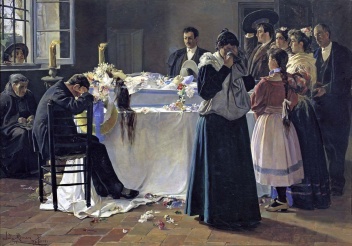
Cordoban painter Julio Romero de Torres is much loved in his home town, and around Spain - his works, which you`ll see on posters everywhere, have adorned postage stamps and bank notes, and inspired songs and films.
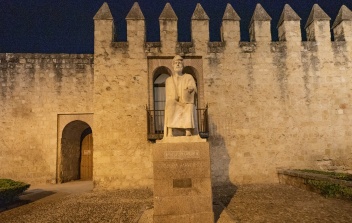
Capital of the Roman province Baetica (roughly the same area as Andalucia today), Cordoba was the birthplace of two Roman poets, Lucan and Seneca (the Younger; the less celebrated rhetorician Seneca the Older was also born here). Later, in the 12th century, Averroes, the renowned Muslim philosopher and polymath, was born here. He rose to become a judge in Seville, Cordoba and Morocco.
Sometimes historic cities have places filled with local lore, steeped in tradition and history. Plaza de Potro is one such place - the "potro" is a colt on a fountain in the square, which hosted animal markets in medieval times. It has a former inn, the 15th-century Posada del Potro, which is mentioned in Don Quixote as a "den of thieves", and where Cervantes most probably stayed when he visited the city (he lived here as a child).
Take a guided tour of the Mosque-Cathedral of Córdoba, a key historic and artistic site in Europe. This UNESCO World Heritage temple reflects centuries of cultural intersection.
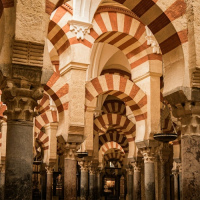
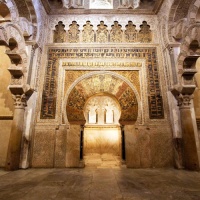
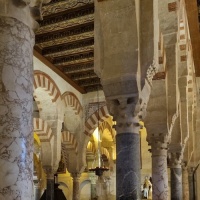
Begin at old al-Ándalus with reused Roman columns, infinite arches, and the prominent mihrab omeya, a prime example of Islamic art.
Visit the Cordoba Mosque-Cathedral with a self-guided audio tour on your smartphone.
Put on headphones to hear about the Outside of the Mezquita’s entrance and move on to learn about Puerta del Perdón.
Continue inside to see its features and listen to historical information and stories from ancient times.
Start your journey in the historic Jewish Quarter, a labyrinth of streets where you'll explore the history and culture of Córdoba. You'll learn about the life of the Jewish community that inhabited this area between the 13th and 14th centuries while admiring its unique architecture.
Unearth one of Cordoba's most precious gems with historians and archaeologists as your guides! Revel in the city that the first Umayyad Caliph, Abd al-Rahman III, brought to life, moving his entire court to this grand setting.
Discover a unique fusion of the Andalusian horse and flamenco in the historic Cordoba city. Witness the seamless blend of classic dressage, cowboy dressage, and high school dressage with the flamenco. The graceful dancer complements the horse’s movements, creating a sight to behold.
Explore Córdoba's rich history with the "Córdoba a Fondo" tour — an ideal adventure for those keen on discovering the city's past. Led by experienced historians, this tour covers the city's renowned landmarks.
Want to explore the Great Mosque of Cordoba at your own pace and not miss any details? Get the audio guide with an entry ticket for a hassle-free and leisurely experience.
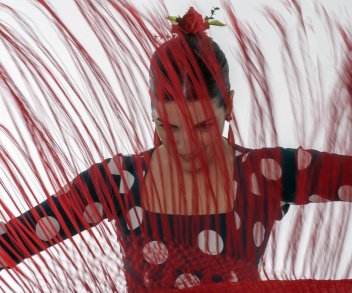
Tablao El Jaleo is where you’ll find the heart and soul of Flamenco. Experience the raw beauty of this Spanish art form, brought to life by talented dancers, musicians, and singers.