Latest Pages

Latest pages

We are committed to updating our pages as regularly as possible, allocating over half of our editorial resources to this essential task, to ensure that you can always find the latest, most reliable information on popular topics and places.

Here is a list with the latest pages that have been updated or created. Most recent are at the top of the list.
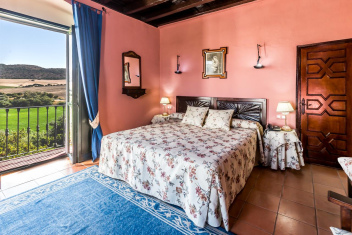
Guillena

Guillena is located close to the Club de Golf Hato Verde, therefore being an ideal location for keen golfers. It has about 12, 500 inhabitants.

El Garrobo

El Garrobo is one of the smallest villages in the province of Seville, occupying a transition space between the regions of Aljarafe and the Sierra Norte. It has about 800 inhabitants.

La Puebla de los Infantes

La Puebla de los Infantes is very well known within the hunting community due to it being home to one of the most important caza mayor (large game) hunting reserves in Spain, El Coto de El Aguila. It has about 3,100 inhabitants.

El Castillo de las Guardas

El Castillo de las Guardas is situated in the north west of the Seville province and consists of 10 other hamlets within its municipal: La Alcornocosa, Archidona, Arroyo de la Plata, La Aulaga, Las Cañadillas, El Cañuelo, Las Cortecillas, El Peralejo, Peroamigo, y Valdeflores. It has about 1500 inhabitants.

El Pedroso

El Pedroso is of particular interest to rural tourism lovers and also to those interested in outdoor activities, such as hunting, fishing or hiking. The village is also part of the Parque Natural de la Sierra Norte de Sevilla (natural park). It has about 2200 inhabitants.

Castilblanco de los Arroyos

Castilblanco de los Arroyos is home to the avant-garde building, Miguel Fisac Municipal Theatre, a structure of cubes that, as an architectural piece and a modern construction, looks beautiful. It has about 5000 inhabitants.

El Real de la Jara

El Real de la Jara forms part of the Parque Natural de la Sierra Norte de Sevilla (natural park), which makes it an ideal spot for nature lovers and outdoor activity enthusiasts. At certain points around the village you are able to enjoy views of the beautiful surrounding countryside. It has about 1500 inhabitants.

Constantina

Constantina is the largest town in the Sierra Norte de Sevilla Natural Park. Originally a Celtic settlement and an important Roman town, it has lots of medieval character particularly in the maze of cobbled streets in Barrio La Morería on the hill topped by a ruined Moorish castle. It has about 6700 inhabitants.

Gerena

Gerena is rich in archaeological remains, famous Andalusian architecture and unique landscape which consist mostly of abandoned quarries. It is the perfect destination for nature lovers and hunting enthusiasts. It has about 7400 inhabitants.

El Ronquillo

El Ronquillo takes its name from the proprietor who, in the fifteenth century, made two roadside cafes/bars that made the foundations for the municipality. It has been awarded the Nacional de Embellecimiento Municipal (National Municipal Beauty) prize several times, but the town centre now has the N-630 roadway crossing it from North to South. It has about 1400 inhabitants.

Guadalcanal

The northernmost settlement on the edge of the the Sierra del Norte Natural Park, Guadalcanal is a pretty village with several Mudéjar churches and a ruined medieval castle and walls. It has about 2800 inhabitants.

Sierra Norte de Sevilla

The central section of the immense Sierra Morena is made up of the extensive and sparsely populated Sierra Norte de Sevilla Natural Park, a landscape of gently rolling hills clad in dense evergreen oaks. It's similar to the adjacent natural parks of the Sierra de Aracena y Picos de Aroche and Hornachuelos, in the provinces of Huelva and Cordoba respectively.

Sierra de Hornachuelos

The Sierra de Hornachuelos extends for 60,032ha and is part of the vast 400,000ha Unesco Biosphere Reserve for the Sierra Morena mountain range, along with the natural parks of the adjacent Sierra Norte and the Sierra de Aracena y Picos de Aroche.

Museo Historico Municipal de Cádiz

Museo Historico Municipal de Cádiz boasts a 19th century mural depicting the establishment of the Constitution of 1812. The real showpiece is a fascinating mahogany and ivory model of the city which dates back to 1779 and which is a fascinating duplicate of all the streets and the buildings much as they are today.

Granada City - Fascinating Fact 3 - Alhambra

The intricate interiors of the Alhambra are as instructive as they are exquisite. Under Islamic law, no depictions of living beings (people, plants or animals) are allowed, so instead the walls and ceilings are covered with symbolic, geometrical patterns, as well as the Nasrids´ motto.

Granada City - Fact 1 - Carmens

Nothing to do with Bizet´s opera, these are hillside townhouses with private walled gardens. They originate from Moorish times, and the design of the carmen expresses the Islamic idea of the inner paradise, a reflection of heaven.

Granada City - Fascinating Fact 2 - New Mosque

In 1981 a group of Spanish Muslims, mostly converts, launched plans for a brand new mosque in Granada, funded by various Muslim countries who have never lost their love for the city.

Gran Teatro

The Gran Teatro (Great Theatre) was built by Pedro Sánchez y Núñez in 1923.It is a stately building of classic style, typical to the late nineteenth century with Second Empire decoration.

Muelle de las Carabelas

Muelle de las Carabelas (Warf of the Caravels) is a waterfront exhibition with life-size replicas of Columbus's three ships: the Niña, the Pinta and the Santa María, built for the 500th anniversary celebrations. The construction of Muelle de las Carabelas was carried out by architect, Pluvio Fernández Heredia, and inaugurated on 15 March 1994.