Latest Pages

Latest pages

We are committed to updating our pages as regularly as possible, allocating over half of our editorial resources to this essential task, to ensure that you can always find the latest, most reliable information on popular topics and places.

Here is a list with the latest pages that have been updated or created. Most recent are at the top of the list.

Bullfighting - Fascinating Facts 2

The origins of bullfighting are probably in the man v beast contests of the Roman gladiators. Even earlier, Palaeolithic paintings found in Spain depict men fighting bulls and other wild animals. In Greek legend, you have Theseus and the Minotaur, a half-man half-bull, while a Babylonian legend has its hero slaying a bull by thrusting his sword "between nape and horns". But there are also strong links with the popular Moorish pastime of rejoneando, where a rider would confront the bull using a (lance) in an arena (picadores in modern-day Spanish bullfighting). Portugal holds rejoneo bullfights where cavaleiros, who wear 18th-century dress and ride padded horses, are the stars, rather than the matadors, as in Spain. In Portuguese bullfights, the bull is not killed in the ring.
History - Copper, Bronze and Iron ages

Chalcolithic (early Copper Age) This is the period with the earliest phase of metallurgy. Copper, silver and gold started to be worked. It is also a period of increased social complexity, rise of the first civilizations and of exchange networks that would reach to the Baltic for amber and North Africa for ivory and ostrich-egg products.

Lobras

Lobras is a small village with its distinctive own personality. It feels as if time has stood still when you walk along its streets and visit its monuments. The location also means that visitors can enjoy tranquil landscapes and amazing natural beauty.

Hotels

As one of the first towns you come to in the western Alpujarras region in Granada Province, Lanjaron is a small but popular destination for visitors. Popular for good reason too. Set among the beautiful rolling mountains of the spectacular Sierrra Nevada region and home to a natural source of fresh mineral water, now widely sold, the modest village of Lanjarón is a must visit for anyone in the region.

History - The Phoenicians

The Phoenicians were a Semitic people who called themselves the ‘Canaan’ and lived in city-states on the coastal strip of what is today Lebanon. The Greeks called these people ‘Phoenician’ which is Greek for the Tyrian purple dye from the Murex mollusc that the Phoenicians traded. Tyre was their main territory but it would be difficult to call Tyre the capital of Phoenicia in the modern sense as all Phoenician city-states had their own kings or rulers — rather like the city-states in Greece.

Setenil de las Bodegas

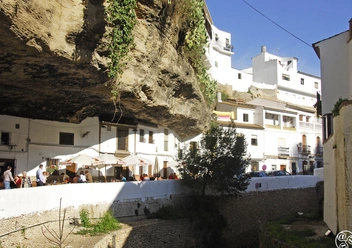
Named after its once flourishing wineries - bodegas - Setenil is probably unique among the pueblos blancos, white villages, of Andalucia. Where most pueblos blancos were built on protective bluffs and pinnacles, this town grew out of a network of caves in the cliffs above the rio Trejo north-west of Ronda.

Via Verde of Olive Oil

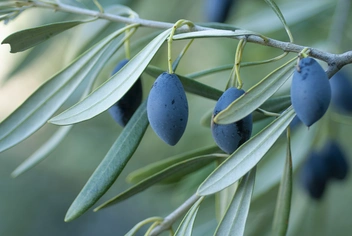
This vía verde (greenway) covers 55km between Jaen and the Guadajoz river, where it joins the Vía Verde of the Subbética. It is suitable for walkers, cyclists and wheelchair users. This greenway follows part of the 120km-long Jaen-Puente Genil railway line used for transporting olive oil from the late 19th century onwards, linking Jaen with Malaga and Algeciras and opening up the market for oil.

Benalúa de Guadix

According to legend, San Torcuato became a martyr in Benalúa de Guadix and was buried where a small chapel has now been built in his honour. Benalúa de Guadix was built on clay land, which made it easy to carve out the area's distinctive cave dwellings. The town has a population of around 3,300.

Plaza Nueva

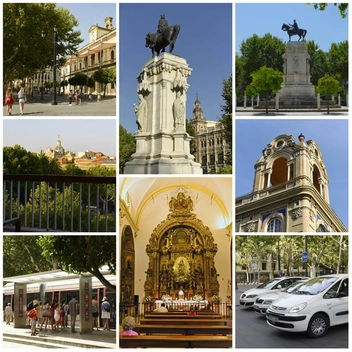
This tree-lined square is the heart of Seville - located at the top of Avenida de la Constitucion, it sits centrally between the shopping area, Arenal and the river, Alfalfa, and the monumental zone and is home to the Ayuntamiento, the Town Hall.

Festivals in Taberno

Festivals in Taberno: Cabalgata de Reyes Magos, Día de la Candelaria, Día de Andalucía, Semana Santa, La Ventolera, San José, Fiesta de Santopétar, Baile de las Animas.

Sierra de Andujar Natural Park

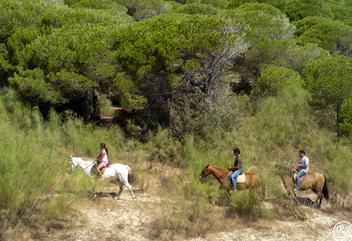
The gently rolling 74,774ha Sierra de Andújar, part of the vast Sierra Morena, is densely wooded and boasts one of Andalucia's best preserved expanses of Mediterranean forest and scrubland. Flowing through the rocky hills is the Yeguas river, with many lovely spots to sit and meditate along its banks. Its more remote areas are inhabited by an impressive number of endangered species, such as the pardel lynx, wolf, black vulture and imperial eagle.

Costa del Sol - Getting Around

It's quite easy to get around the Costa del Sol as the A-7 (old N-340) ties the coast together from one end to the other.  The AP-7 is a toll motorway running slightly further inland. This makes traveling by car especially easy. Only during rush hours and peak months - June to August - and important holidays, does this road suffer tail backs in certain, key areas. Usually around Malaga city, around Fuengirola and around Puerto Banus.

Via Verde of the Sierra de Baza

Via Verde Sierra de Baza follows the lower northern slopes of the Sierra de Baza. It lies just to the north and outside the Sierra de Baza natural park. The Via Verde Sierra de Baza is 9,4 km long and runs for a few km north and south of Baza town as far as the municipal limits with Zujar and Caniles.

La Torre de las Bóvedas in Guadalmina

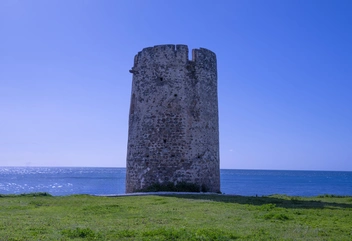
This is a defensive watchtower from the XVI century. It takes its name from the Roman baths, which are about 50 metres to the west. It is one of a chain of towers along the coast built at that time to warn the locals of pirates and possible Moorish invasions from North Africa. It is slightly conical in shape, but less so than the others, and leads to a larger terrace, perhaps to accommodate larger artillery. Built of stone, not brick, it is 13m high and has a diameter of 8.3m at the base.

Carmona

Carmona is a picturesque, small town with a magnificent fifteenth century tower built in imitation of Seville's Giralda, which is the first thing you see upon arriving. It has about 28, 500 inhabitants.

World Tourism Statistics

The total world International tourist arrivals were to 764 million in 2004 up from 693m in 2001. Spain has dropped to the fourth most popular destination country in the world after France, USA and China after being second to France for many decades. The chart below shows the number of foreign tourist arrivals in the top countries for 2019, 2010, 2004, and 2001.

Festivals in Dalías

Festivals in Dalías: Cabalgata Reyes Magos, Día de Andalucía, Fiesta de la Cruz, Fiesta de San Juan, Fiesta del Cristo de la Luz and Día de San Miguel Arcángel.

Book your stay in Andalucia Now!