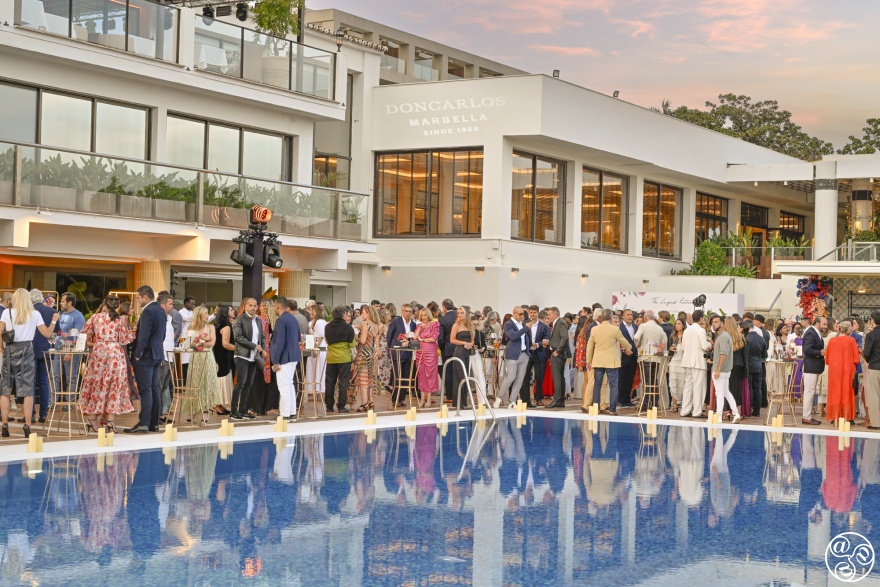
 The return of Don Carlos Marbella, wrapped in Golden Age glamour © Michelle Chaplow
Don Carlos Hotel, Marbella - The Legend Returns
By Chris Chaplow
The five-star Hotel Don Carlos in Marbella is a familiar landmark on the Costa del Sol. Towering over the pine trees on the beach-side of the coastal highway, it has been a feature of eastern Marbella since 1969. Following a three-year, €50 million renovation project where the interior design was overseen by Jaime Beriestain used natural materials such as marble, local ceramics and raffia in soft, earthy tones to create spaces that feel both refined and welcoming. The lobby and tower bedrooms are decorated with cheerful, uplifting wallpaper featuring birds and flowers.
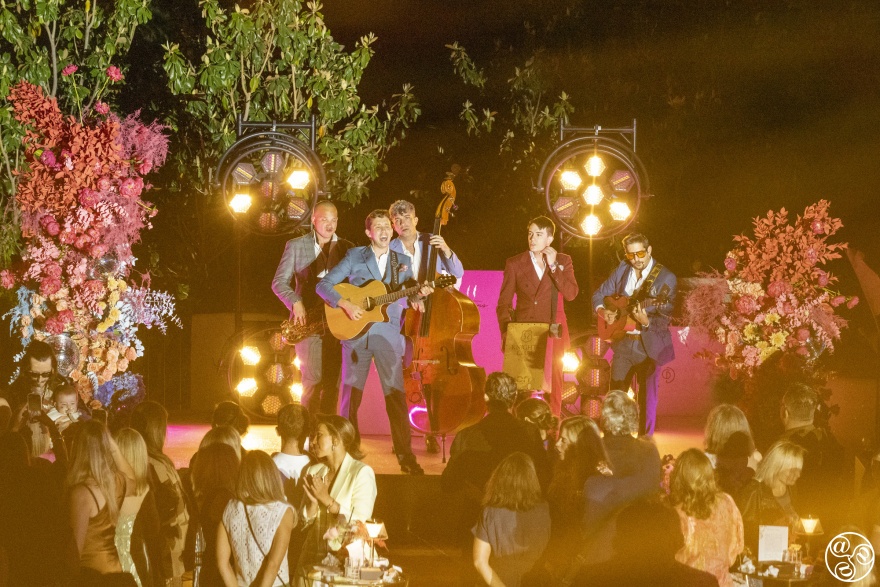 The Legend Returns party at Don Carlos Marbella © Michelle Chaplow
The Opening Party - May 2026
On the evening of 7 May 2026, this legendary hotel made its long-awaited return to Marbella with an official reopening celebration held across the lobby and pool terrace. More than 700 guests moved through the music-filled interiors before descending the flower-draped staircase to the terrace below, where a roaming dance band brought the evening to life.
As the musicians weaved effortlessly among the crowd, the atmosphere felt both intimate and theatrical. Each performer was equipped with discreet radio microphones, allowing for professionally balanced, crystal-clear sound throughout the terrace without disrupting the flow of conversation or movement. The result was an immersive musical experience that carried seamlessly across every corner of the celebration.
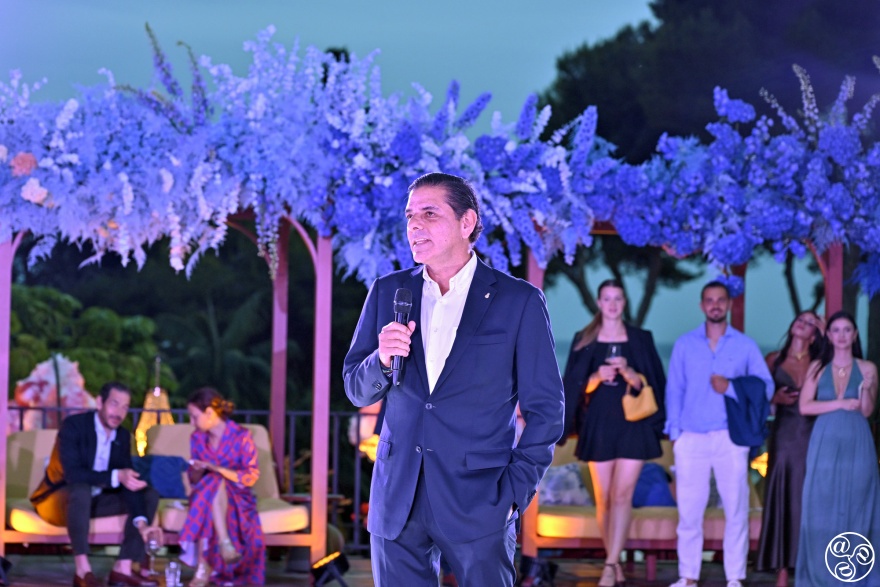 Jorge Manzur GM of Don Carlos, opening the party © Michelle Chaplow
General Manager Jorge Manzur gave the guests a warm welcome, stating: 'This reopening means much more than simply the reopening of a hotel; it represents the rebirth of an icon of Marbella and the Costa del Sol. Don Carlos is now embarking on a new chapter, committed to honouring its legacy and projecting it into the future, while offering a contemporary experience based on the Mediterranean lifestyle and excellence, and above all, the talent of our team.”
The evening’s culinary offering was as extravagant as the setting itself, with more than 80 dishes served throughout the celebration. Guests moved between elegantly presented food stations and attentive waiting staff offering everything from freshly shucked oysters to an opulent dessert banquet overflowing with candy-floss clouds, macarons and an array of indulgent sweet creations. Champagne, cocktails and flowing beverages completed the experience, ensuring the atmosphere remained celebratory well into the night.
Beyond the dining experience, the event embraced a sense of theatrical immersion and refined nostalgia. A black-and-white photo booth offered guests timeless keepsakes, while a team of artists created delicate watercolour portraits throughout the evening — memorable, personal souvenirs that captured the spirit and glamour of the hotel’s long-awaited return.
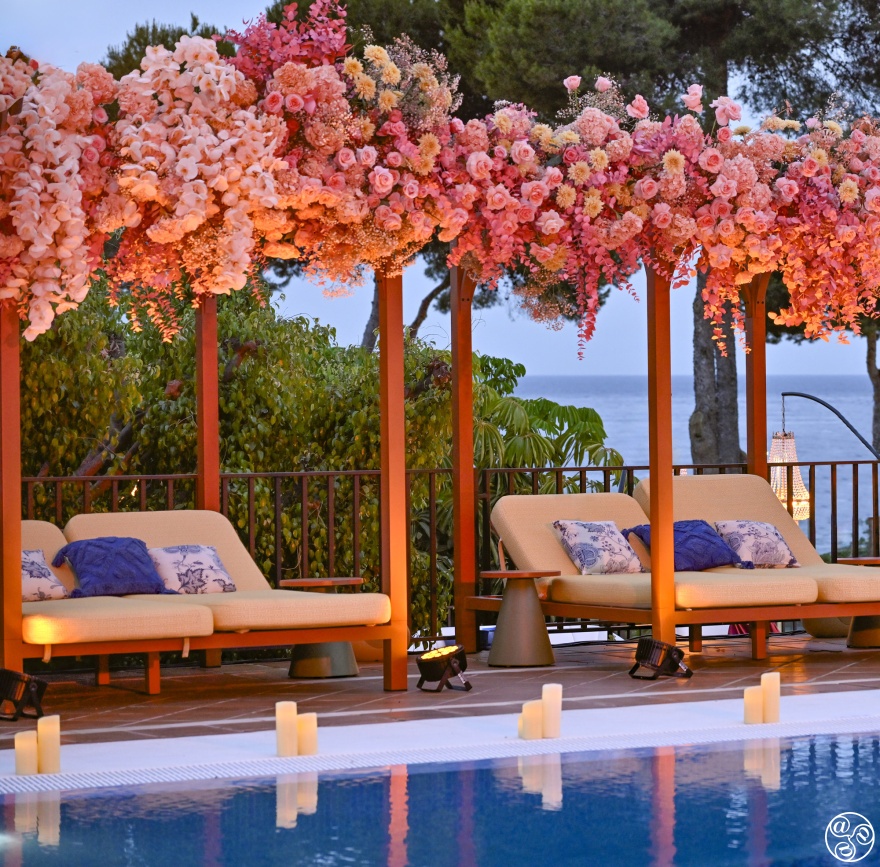 The placement of the flowers, for the opening, took a team of 20 florists over 500 hours.© Michelle Chaplow
The breathtaking floral arrangements were designed by Virginia Gonzalez, who used more than 500 natural stems in the Don Carlos color palette. The placement of the flowers took a team of 20 people over 500 hours. A combination of hydrangeas, of which there were 1000, coral roses, 800 peonies, delphiniums, orchids, and more were used throughout the display. Flowers cascaded down the staircases and over the balinese beds by the pool. To be surrounded by these natural flowers was truly extraordinary.
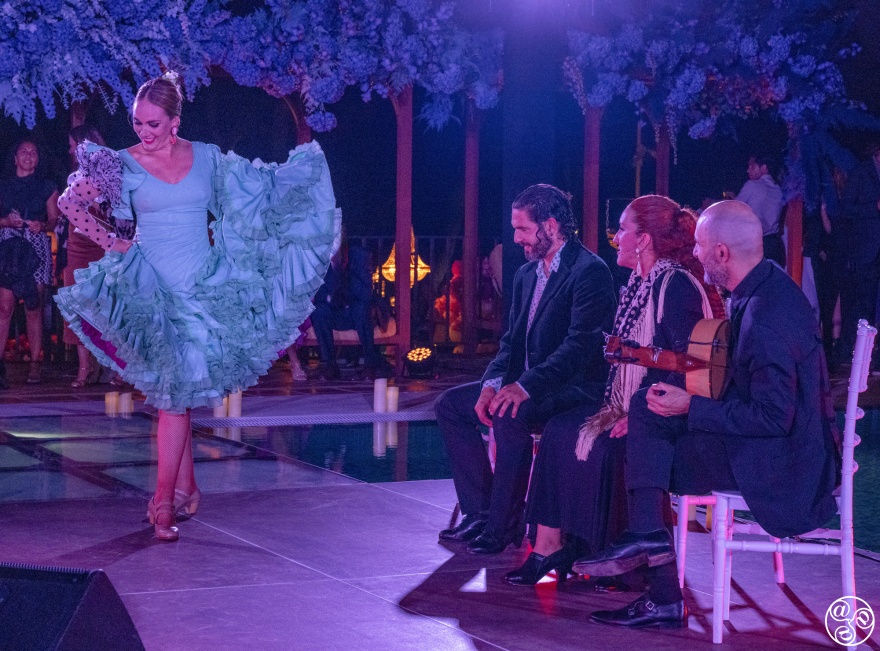 There was live Flamenco too! © Michelle Chaplow
A flamenco dancer performed on a stage over the swimming pool and one by one musicians joined her to form a quartet. The above water location ensuring everybody had an unobstructed view of the performance.
Then came the unmistakable sound of brass echoing across the venue. More carnival than ceremonial, the eight-piece band burst into a lively procession of reimagined marching songs and pop classics. In the spirit of a modern-day Pied Piper, they led guests from the main terrace down to a lower level known as the “Candy Bar”.
There, a long banquet table had been transformed into a whimsical fantasy scene, adorned with chandeliers, candelabras and drifting clouds of candy floss. The table itself overflowed with brightly coloured confections — marshmallows, popcorn, macarons, lollipops and every imaginable sweet indulgence, creating an atmosphere somewhere between elegant soirée and childhood dream.
After midnight, as the crowd began to thin and the evening’s formalities gave way to celebration, members of the hotel staff finishing their shifts were invited to join the festivities. It was a thoughtful and genuinely warm gesture, with Sr. Manzur and members of the team enthusiastically encouraging guests onto the open-air dance floor. Beneath mature trees in the Don Carlos gardens, Studio 54-style mirror balls shimmered overhead as dancing continued into the early hours under the Marbella night sky.
Late-night refreshments remained available throughout, and departing guests could still pause for one final indulgence: burgers and chips served from a nearby stand.
It was a genuinely unforgettable night: a celebration that combined a champagne reception, an abundance of floral decorations, live bands, flamenco performances, elegant canopies, sweet treats and a disco, several parties rolled into one. The Don Carlos team not only opened the hotel, but also the Marbella summer season, setting an exceptionally high standard for 2026.
It was said in 1969 that the original opening party would be impossible to replicate; magazines repeated the claim in 1991. Now, in the age of mobile phones and the internet, this latest celebration has been recorded in vivid detail for a new generation.
We cannot predict the future, but we can recount the history of the legendary Hotel Don Carlos, Please read on.
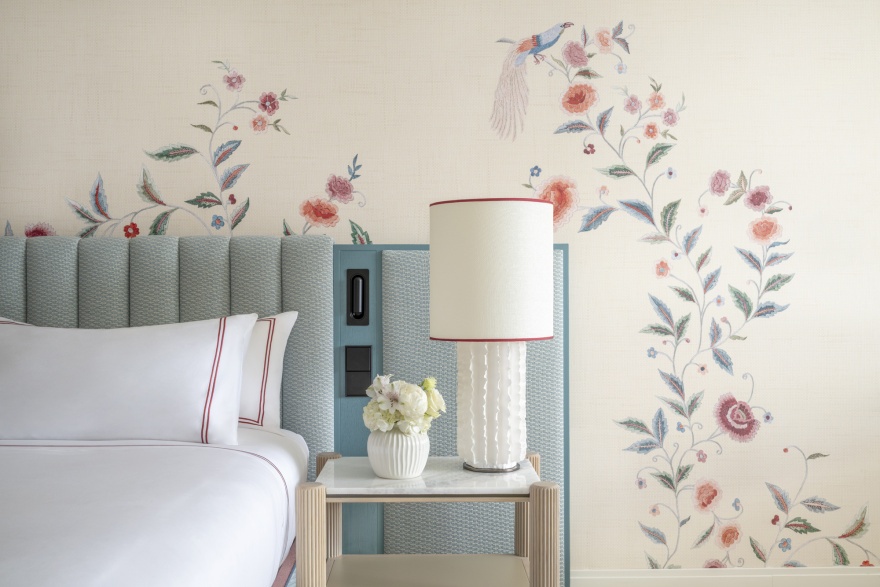 The newly renovated Hotel Don Carlos Marbella, interior design by Jaime Beriestain © Michelle Chaplow
History of the Don Carlos Hotel, Marbella - The Tale of Three Parties
The Beginings of the Hotel
The Marbella Palace Hilton hotel is one of the few high-rise buildings ever constructed in Marbella. Commissioned in 1963 by Europahotel S.A., it was designed by architects José María Santos Rein and Alberto López Palanco. Europahotel S.A. had acquired a 16,000 m² plot of land between the beach and the N-340 coast road at km 188.
Marbella Town Hall had favoured covering the whole site with low-rise buildings, and around 1960, a more modest hotel project was designed by Asturias architects Alas Rodríguez and Pedro Casariego Hernández-Vaquero. This hotel bears a remarkable resemblance to their 1958 project; Hotel Venta Las Chapas, which was constructed just over the coast road for Playsol. It later became the Hotel Las Chapas, then the Palacio del Sol and later the AluaSun Marbella Park. The project was completed in 1960 and substantially enlarged in 1995.
The president of Europahotel, Mr Moore, decided to acquire the coastal land on which the two block's concrete skeleton structure had already been built. The new project incorporated these two four-storey blocks facing the sea and the mountain. Construction of the iconic tower considerably increased the number of rooms, meeting the requirements of the Hilton chain, with whom the developer had a contract to lease, manage and brand the property.
Tropical gardens covering an area of 40,000 square metres and running right down to the beach were created in keeping with the exoticism of the period. This created another unique feature of the Don Carlos resort.
Ciudad de Elviria
It is worth mentioning that Europahotel S.A. and its primary promoter, Salvador Guerrero Ramírez, originally planned a much larger luxury complex than the single tower we see today. The original master plan, designed by architects Alberto López Palanco and José María Santos Rein, proposed a high-density 'forest of towers' along the Elviria coastline. The idea was to create a vertical city called 'Cuidad de Elviria', comprising eight luxury hotels and apartments, to maximise sea views while preserving the pine forests at ground level. This was only one of several plans proposed at the time. As there was no territorial plan for the Marbella Town Hall to implement and the proximity of the N-340 coast road, the ambitious plans were never approved.
Hilton Hotel chain
In those days, the Hilton chain had very strict specifications; any Hilton client should recognise the hotel and feel familiar with it, regardless of its location. Guests would find the switches, lighting and even bathroom fittings familiar. The architects collaborated with the Hilton chain's technical office and interior designer, Maurice Bayley. The two pre-Hilton blocks each had four floors, with 22 rooms arranged on either the sea or mountain side of a central corridor.
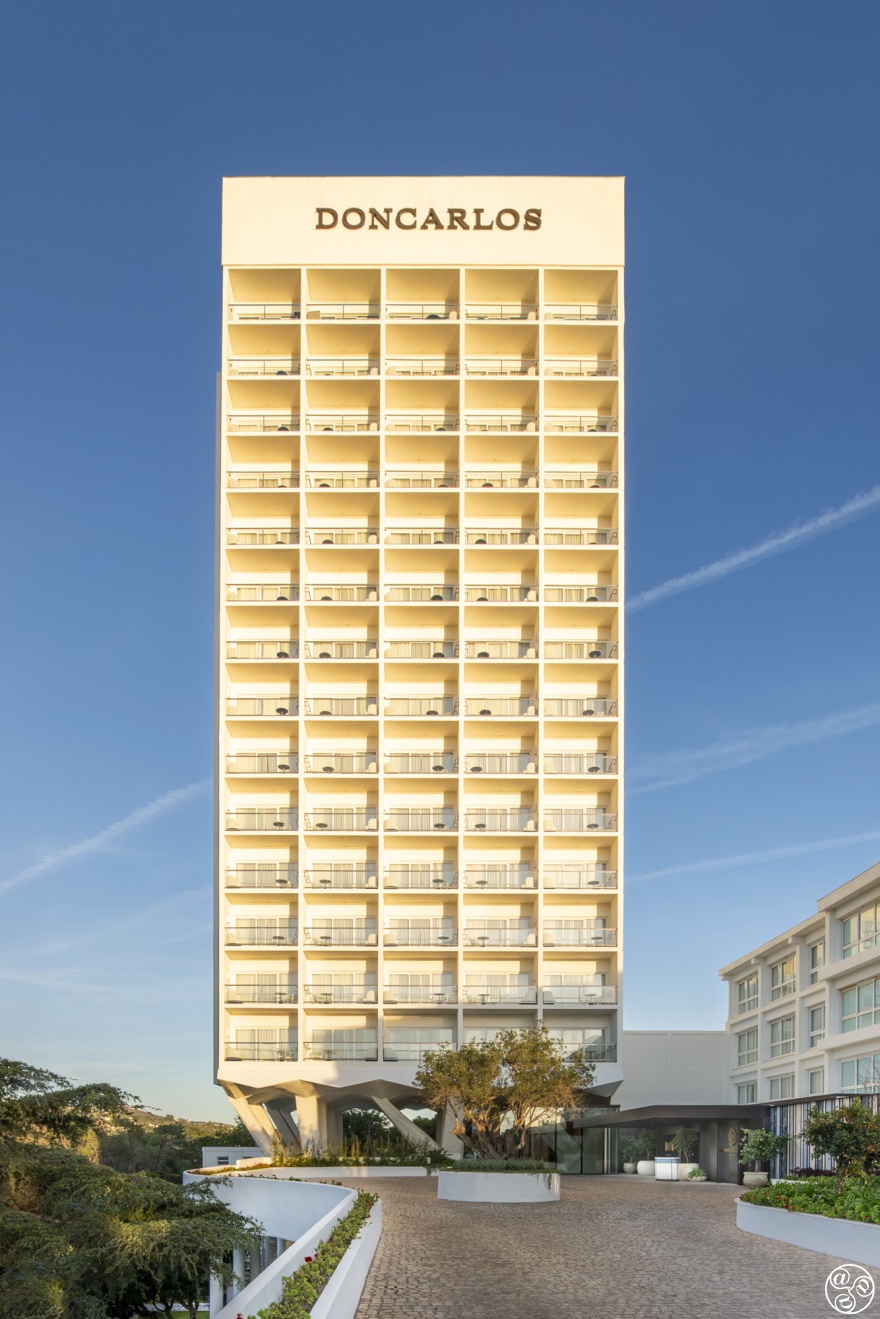 The Iconic Don Carlos Tower © Michelle Chaplow
The iconic Tower
It was decided that the guest rooms for the project should be located in a 14-storey iconic tower, with nine rooms per floor arranged at right angles to the existing blocks. The rooms in the tower are arranged on either side of the north-south corridor; none face directly south towards the sea. This east-west orientation ensured that all the rooms had sea views. Although this bold decision was highly criticised at the time, it is now widely admired.
The tower was supported by five four-armed concrete pillars, which formed twin road access underneath the tower. The main lobby entrance is located beneath the tower, eliminating the need for a canopy to shelter guests from the elements. The goods delivery point is discreetly located on the lower level. This innovative design was the first on the Costa del Sol to incorporate passenger cars and delivery vans into the architecture, and it was featured on countless postcards. The entire tower is supported by an elevated 1.3-metre-deep slab with a waffle-shaped underside which, in turn, is supported by the concrete pillars. This original design was the work of engineer Rafael López Palanco.
The American construction method was unique on the Costa del Sol. This tower has no ceramic brick or block room partitions; all the internal and external walls were cast from in-situ reinforced concrete. This required all installations to be pre-planned and all openings to be constructed with precise accuracy. This contrasts with typical construction methods of the time, as seen nearby in Eugenio Vargas Esquerdo's 1972 Torre Real Tower, which features a solid central column that anchors the floors together but takes up valuable space.
The architect José María Santos Rein was a supporter of the high-rise building. Other hotels he designed include the Hotel Atalaya Park I and Atalaya Park II in Estepona, and the 1972 Hotel Don Miguel in Marbella. Here, he designed a large, winged construction with a central core incorporating the elevators.
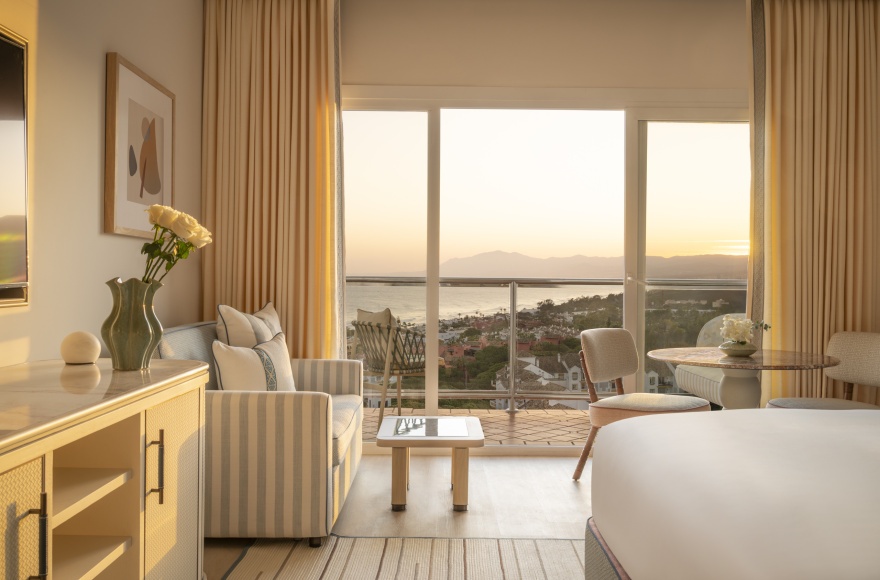 The view from the tower of the Hotel Don Carlos, Marbella (c)Michelle Chaplow
Completed in 1968
The work was completed in 1968 and was one of the largest projects in terms of budget in Spain. The building licence issued in 1964 estimated the investment to be 38 million pesetas, but the final cost by 1969 reached 300 million pesetas. The neo-Mudejar interior decoration, which captured the picturesque essence of Andalucia, remained until an extensive refurbishment in the 1990s.
The Grand opening
The Marbella Palace Hilton Hotel opened in 1969, marking the last hotel opening attended by Conrad Hilton, the founder of the world's first hotel chain and Paris Hilton's great-grandfather. Five hundred guests attended the opening party, all dressed in gold and black — the same colours that adorned everything from the palm tree trunks to the table linen.
From Marbella Hilton Hotel to Don Carlos Hotel
When the lease on the hotel property came up for renewal, Hilton decided not to renew it. This was surprising, given that the hotel was successful. Many different reasons have been suggested for this decision. Following the oil crisis of the mid-1970s, many international hotel chains began shifting their business models. Hilton International moved away from long-term leases in favour of more flexible management contracts. The company was also focusing its capital on major urban hubs and airport locations rather than seasonal resort properties. Due to the Marbella Town Hall's increasing scrutiny of urban planning, Hilton realised that the original eight-tower plan was not feasible.
As Christopher Clover states in the Panorama blog, "On Franco’s last trip to Marbella in the spring of 1973, to inaugurate the new Clínica Incosol, he supposedly noticed the towers of the Hilton Hotel and the studio-apartment hotel next door, as well as the Torre Real in front of Incosol. He was absolutely horrified and ordered that such tall buildings should never again scar the skyline of Marbella in the same way as had already happened in Torremolinos and Benalmádena Costa". Whether the story is true can be judged by the fact that no more towers were ever constructed in Marbella.
So, rather than finding another international brand, the property owners, Europahotel SA, decided to take over the management directly. Don Carlos de Salamanca (the Marquis of Salamanca) was a shareholder and a respected figure in Marbella's social and business circles. Europahotel chose to rename the hotel in his honour. This shift moved the hotel away from the 'American Hilton' identity and towards a 'Spanish Grandee' brand.
The large 'HILTON' signs, one on each side, which adorned the top of the hotel and were clearly visible to the thousands of people driving along the coast road every day, were taken down and the 'DON CARLOS' sign was put up in their place, where it proudly beacons to this day.
Don Jaime de Mora y Aragón's birthday party
At the time, it was said that the 1969 opening party would be impossible to replicate. However, this was surpassed by Don Jaime de Mora y Aragón's birthday party, which took place at the hotel's beach club in the summer of 1991. According to Rafael de la Fuente, the hotel's general manager from 1991 to 1993, it was 'the most beautiful on the Spanish Mediterranean'. The host, Adnan Khashoggi, was torn between giving Jaime a cake depicting the aristocrat playing a real piano and one featuring a pastry piano complete with a horn of plenty filled with gold coins. In the end, Khashoggi chose both.
Selenta Hospitality Group
In 2006, Selenta Hospitality Group, a Spanish hotel owner and operator, purchased the Don Carlos hotel from EuroHotels. After being acquired by the Canadian company Brookfield Asset Management in 2021, Selenta embarked on a three-year, €50 million renovation project.
The newly renovated Don Carlos hotel reopened in summer 2025 and was officially inaugurated on 7th May 2026.
About the Hotel Don Carlos
The Don Carlos Marbella boasts 284 rooms, including 57 junior suites and a presidential penthouse suite. All rooms offer panoramic sea or garden views. There are also 24 private residences with an exclusive swimming pool. Guests can enjoy a wide range of dining and refreshment options at various venues, including the Los Naranjos, Sol y Sombra, Manero and Oasis Kitchen restaurants, the Breakpoint café, and the Manero kiosk, which is a Paris-Madrid-style café-bar located in an open courtyard and the Sherry Bar in the lobby. There are also two beach clubs: Nikki Beach Marbella and Lucia Marbella, the latter of which has a more family-friendly atmosphere. Other highlights include a renovated spa, the Rafa Nadal Tennis Centre, and a kids' club with large aquatic play areas. Guests can wander through 20,000 square metres of landscaped gardens and ornamental pools. The hotel offers 17 meeting rooms, including the Don Carlos Ballroom - the largest in Marbella.
Book Hotel Don Carlos Marbella


sources
|
Hotel Venta Las Chapas La Opinion de Malaga article Hotel Don Carlos in Architectura del Siglo XXI en Malaga Project Don Miguel Marbella by Santos Architects Doctoral Theses Juan Gavilanes Velaz Marbella Town Halls answers to questions by Direction General Promocion de Turismo on the Declaration of Costa del Sol as a Zone of Tourist Nacional Interest. 07 October 1966. |