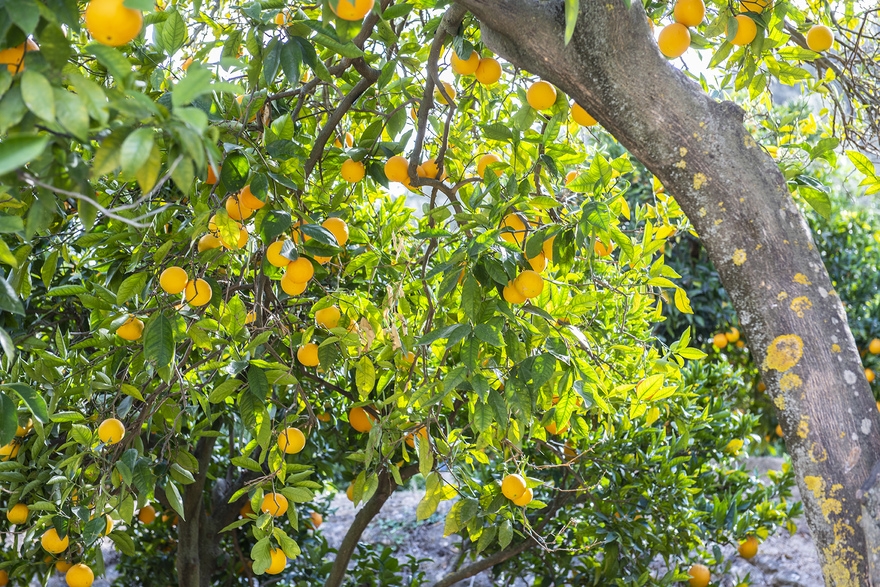
 Oranges grow in abundance in El Valle
El Valle
El Valle is not a village, but a municipal district created in 1972 from the merger of three small villages: Saleres, Restábal and Melegís.
As the largest village and located between the other two, Restábal is known as the capital village and is where the town hall is located. El Valle was once home to Ian Gibson, the Irish writer and Spanish history expert. The district has a population of around 1,130.
HISTORY
The towns of Restábal, Melegís and Saleres did not come together as El Valle until 10 October 1972, when they were united under the same council, which adopted the name El Valle and established its headquarters in Restábal. However, these three towns have experienced similar historical developments over the centuries due to their geographical proximity, as have the other towns in the Lecrín Valley of Granada. More>
THINGS TO SEE
Mengelís
Things to see in Mengelís are Mirador de las Alvirillas, Lavadero Público , Iglesia de San Juan Evangelista and Baños. More>
Restábal
Things to see in Restábal are Mirador de los Guitaros, Iglesia de San Cristobal and Antigua Pescadería. More>
Saleres
Things to see in Saleres are Iglesia de Santiago. More>
THINGS TO SEE OUTSIDE THE TOWN
Los Baños (Melegís)
The thermal waters of El Baño have long been praised for their healing properties for certain skin conditions. The water has a constant temperature of around 24 degrees and is slightly warm. The Town Hall recently restored the El Baño area, which consists of two swimming pools and other facilities for sunbathing, recreation and enjoying shade in summer. The baths have been open to the general public for several summers now. They are located 2 km from the town, past the cemetery.
Ermita del Cerro (Restábal)
Built in 1998, the chapel serves as a throne for the image of the Virgen de Fátima, which arrived in Restábal some time ago. There are beautiful views of Restábal and the Béznar reservoir from here. It is located on Calle Calvario.
Castillo de Restábal
Dating back to the fourteenth century and the Nasrid period, the castle served as a control point for the surrounding farms and as a crossing point from the Lecrín Valley to the coast via Restábal and Los Güajares. Remnants of what was once a wall can still be seen. The castle was destroyed by the Marquis of Villena in 1491. The abundance of archaeological remains suggests that one of the ancient Moorish villages, either Naro or El Cantil, may have been located here. Part of the castle's walled enclosure has survived, enabling us to deduce the layout of its perimeter. The most significant remains are a large, rectangular cistern divided into four parallel sections. It is located northwest of the town.
NATURAL AREAS
Embalse de Béznar
The Béznar reservoir is mainly supplied by the waters of the Ízbor River, the main tributary of the Guadalfeo. Built to improve irrigation for subtropical produce in the Motril and Salobreña areas, supply the population of Granada's Costa del Sol, act as a flood defence and guarantee concession flows to the Ízbor hydroelectric power station, the reservoir was completed in 1986. Construction of the Béznar Reservoir began in 1977 and was completed in 1986. It was constructed at a location known as 'El Salto del Lobo', where the river narrowed to such an extent that there were rocks between the riverbanks, supposedly allowing a wolf to jump from one to the other, hence the name. In terms of sports activities, canyoning and bungee jumping are popular, and the reservoir is also a renowned spot for sport fishing, particularly for cyprinids and black bass.
COUNTRYSIDE WALKS
Sendero Barranco Luna
This route passes through a karstic gorge, which was formed by the erosion of sediments that were deposited when the Tethys Sea covered this area and created a coral reef. More>
Ruta del Azahar
The orange blossom route is a gentle route, ideal for photographing some of the best landscapes in El Valle.
BUS SERVICE
There is a bus service from Melegís to Granada, Pinos del Valle, Albuñuelas, and Los Guájares. More>
GASTRONOMY
Local produce includes olive oil, wine, beans, oranges and lemons. On the first Sunday of every month, the Lecrin Valley farmers' and artisans' market takes place.
Traditional delicacies of El Valle include puchero de hinojos (fennel stew), pisto de calabaza (ratatouille with pumpkin), ensalada de pimientos coloraos (pepper salad), caracoles en salsa (snails in sauce), manos de cerdo (pigs' trotters) and albóndigas de bacalao (cod meatballs). For dessert, try leche frita (flour, milk and sugar fried and rolled in sugar), crema de naranja (orange cream), torrijas (French toast) and pastas de almendra (almond pastries).
The Feria del Citrico (Citrus Festival) is held in Melengis ever year in the week before Semana Santa, with the Festival de la Naranja taking place on the Saturday before Palm Sunday.
FESTIVALS
Popular festivals in El Valle are Fiesta de San Antonio, Santa Ana, Fiestas de la Virgen del Rosario, San Cristóbal and Romería Virgen del Cerro. More>
WEATHER FOARECAST
The weather forecast for the next few days for El Valle. More>
TOURIST OFFICE
The tourist office of El Valle is located in the Town Hall. More>
NEARBY PLACES
The neighbouring villages to El Valle de Lecrín and Albuñuelas
