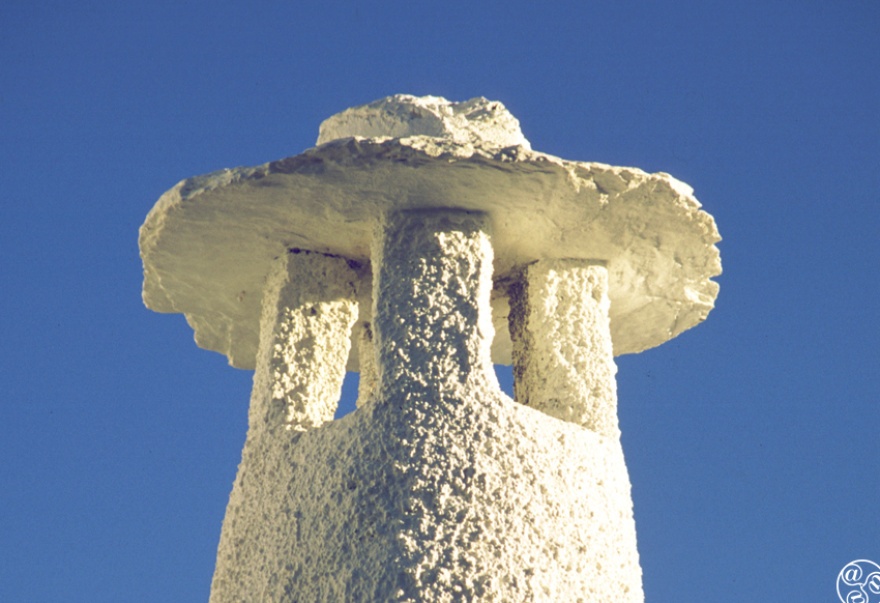
 Local architecture in Aplujarra de la Sierra
History
The Alpujarra has been, throughout the millennia, the scene and silent witness of countless historical events. The Syrians and Phoenicians were the first people to establish commercial relations with the native colonies of the Spanish Mediterranean and were the possible founders of Sex (Motril), Ábdera (Adra), Sexi (Almuñecar), etc.
It is known that the Carthaginians, heirs to the Phoenician commercial interests, established prosperous industries along the Alpujarra coast, based on the salting of fish, minerals, esparto grass from Almería and goods derived from the sea. There is also abundant evidence of the passage of the Romans through the Alpujarra, from the year 27 BC.
It is believed that the first settlers of Alpujarra de la Sierra were African tribes descended from the Hamitic ethnic group who came in the Neolithic period and occupied the lands that comprise the strip between Sierra Nevada and the Mediterranean. Proof of this are the examples of polished axes, stone knives and other Neolithic elements found in Mecina Bombarón, Bérchules and Mairena. Around the year 1200 BC the Tartessians settled on the slopes of Sierra Nevada, exploiting its mines and cultivating its valleys. Later came the Phoenicians, Greeks and Carthaginians, but their stay in these lands would be very short-lived and they would soon give way to the Romans.
The Arabs achieved irrigated agriculture using sophisticated irrigation systems, some of which are still in use today. The most documented part of the history of the Alpujarra is the rebellion of the Moors in 1568. The Catholic Monarchs established the Capitulations with the Islamic population, in which their properties, freedom of customs and religious worship were respected, but discontent was general and the uprisings continuous. On Christmas Eve of 1568, a rebellion took place in which Don Fernando de Válor was crowned King of the rebels, Abén Humeya.
The following year he was assassinated, and his cousin Diego López, Abén Aboo, historically known by the cruel name of “El Reyecillo”, assumed the reign. He was hated by his enemies and by his own supporters, after having betrayed his cousin. He was at the head of the Moorish rebellion for a year and a half, and finally died on March 15, 1571, in a cave located between Mecina Bombarón and Bérchules. This date marked the total expulsion of the Moors from the Alpujarra, and so that these lands would not be deserted and in order to alleviate the serious economic effects, Felipe II ordered that the Alpujarra be repopulated by more than 2,000 families from Galicia, León, Asturias and Castile.