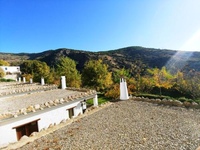
Ermita de Cortes
This chapel is located in the Sierra de Bérchules, specifically in an area known to the municipality's inhabitants as Cortes or Cortijo del Cura.
This chapel is located in the Sierra de Bérchules, specifically in an area known to the municipality's inhabitants as Cortes or Cortijo del Cura.
The primitive church from the 17th century was destroyed by the Moors during the Rebellion of Las Alpujarras. During this rebellion, the Moors entered the church during midnight mass.
The municipality has several lavaderos, or washing areas, including the Fuente Grande, Portón, Barrio García, Fuente Grande de Alcútar and Caldedería sites.
This church, which was built between the sixteenth and seventeenth centuries, stands on the site of an old mosque. It consists of three naves, each of which is separated by four arches.
Eras are threshing floors that were used until recently to separate grain from cereal and dried legume plants. This process is called 'parva'.
The origin of the name Bérchules is believed to be derived from the Arabic 'berchul', meaning 'vergél' (garden), possibly due to the abundance of springs, fertile lands and pleasant temperatures, despite the town being situated at an altitude of over 1,300 metres and close to the perpetual snows of the Sierra Nevada.
The town of Bérchules is made up of two smaller areas: Bérchules and Alcútar. The village largely consists of working orchards and is served by many different water sources.
The tourist office of Dílar is located in the Town Hall.
Weather forcast for the next five days for Bérchules.
Popular festivals in Bérchules are Santo Cristo de la Misericordia, San Pantaleón, Fiesta de San Marcos, Semana Santa and Romería de San Isidro.
There is a bus service from Bérchules to Granada using the local bus company.
Elegant Accommodation
Casitas El Paraje de Berchules in Bérchules offers a holiday home with a swimming pool, sun terrace, and lush garden. Guests enjoy free WiFi, a restaurant, and a variety of on-site facilities including a waterpark, games room, and bike hire.
Comfortable Amenities
Turismo Rural & SPA El Cercado has a seasonal outdoor swimming pool, garden, a terrace and restaurant in Bérchules. Each accommodation at the 3-star hotel has mountain views and free WiFi. There is free private parking and the property features paid airport shuttle service.