Latest Pages

Latest pages

We are committed to updating our pages as regularly as possible, allocating over half of our editorial resources to this essential task, to ensure that you can always find the latest, most reliable information on popular topics and places.

Here is a list with the latest pages that have been updated or created. Most recent are at the top of the list.

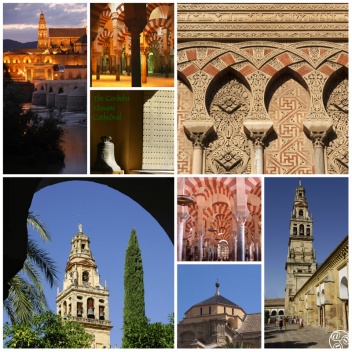
Iglesia de la Virgen de las Angustias

The church was built on the site of the former mosque, dating from the sixteenth century. The choir is impressive, created with great originality, and the interior is divided into the main altar (dedicated to the Virgen de las Angustias) and the two side chapels (one in honor of Jesús Nazareno and the other of the Virgen de la Soledad).

Hornos de Calcinación

The Calcination Furnaces were recently recovered and depict a faithful reflection of the mining past of Lucainena de las Torres. After extraction, the ore was treated in these furnaces, before subsequent transport via rail.

Iglesia de Nuestra Señora de Montesión

The church dates back to 1505 and was built on the site of a former mosque. Around the time of the Moorish rebellion in the same century, the area was invaded by the pirate Omar- Al Askenn, who looted the population in 1566.

Iglesia de Nuestra Señora del Patrocinio

Ecclesiastically, Olula belonged to the Castro parish from 1505 to 1782, at which point it was granted its own parish, taking the Virgen de Patrocinio as the Patron Saint. The ceiling of the parish church is formed of wooden beams, however, its central dome is made of stone.

Castillo de Tahal

The Mudejar church construction is from the fifteenth and sixteenth centuries. Although it is called a “castle”, it is rather a tower from the Christian era that has been the subject of a restoration project by the Junta de Andalucía.

Iglesia Parroquial

The Church is of Mudejar style, repaired after the expulsion of the Moors in the sixteenth century with the arrival of the new settlers. It consists of a central nave and side chapel, housing images and accessories of great artistic and sentimental value for the locals. Located in Plaza del General Franco.

Centro de Interpretación Torre

The Torre de Tahal Interpretation Centre contains information relating the Torre del Homenaje and the territory it dominates; its function and historical development, and its ancient and contemporary relevance.

Centro de Interpretación de la Historia a la Leyenda

The Interpretation Centre of History to Legend reveals the monumental wealth of the fortifications of Senés, as well as the human aspects that gave rise to the particular celebration of the Moros y Cristianos Festival of Senés. Located on Calle Granero.

Ermita del Santo Cristo del Consuelo

The chapel houses the Cristo Consuelo, patron saint of this municipality. The altar is decorated with a fresco painting made in the late twentieth and early twenty-first centuries. It was formerly a vault in which the Holy Christ was located.

La Almazara

A family oil mill that began its activity around 1920 and was in operation until 1970. The mill belonged to Maria Martinez and Isabel Martinez. Many residents of the municipality used the mill to press their locally grown olives to make their annual supply of oil.

Iglesia de Nuestra Señora de la Encarnación

The church predates the sixteenth century, however, during the uprising of the Moors the temples of Tahal and Alcudia de Monteagud were burned. These churches were restored or rebuilt based on a project commissioned by the Bishop of Guadix.

Iglesia Parroquial de Nuestra Señora de la Paz

The origins of this church date back to the fourteenth century. The transept was added to this primitive foundation in the fifteenth and sixteenth centuries and the two portals in the eighteenth century. However, the church’s configuration today is the result of reform carried out at the end of the nineteenth century by the architect Justino Florez Llamas.

Puente de San Bartolomé

Work on the San Bartolomé Bridge began in 1550, in order to link the urban nucleus and fertile plains with the mountains. Its construction was completed in 1587. Located north west of Marmolejo, off the A-420.

Iglesia de Nuestro Padre Jesús

Also known as Ermita de Jesús, this church was one of many that existed in the town, according to the seventeenth-century historian Terrones Robles. Whilst the vast majority of these churches have been destroyed over time, this church has survived, thanks to restoration works carried out in 1887.

Museo de Arte Contemporáneo Mayte Spínola

The Mayte Spínola Contemporary Art Museum was created in 2004 using a donation from the artists belonging to the “ProArte y Cultura” Group, whose founder and director is Mayte Spínola, with Cristóbal José Relaño Cachinero being Mayor of Marmolejo.

Ermita de Santo Cristo

Built at the beginning of the nineteenth century, this chapel was situated at the end of the Via Crucis that was at the exit of the town leading towards the Spa. It was one of the stops on the route of the old tram. Located off the A-420.

Ermita de San José

This chapel was related to the religious cults of the inhabitants of the Marmolejo farm of La Centenera. The exact date of its construction is not known, although estimates place it somewhere in the mid-nineteenth century.

Castillo de la Aragonesa

The fourteenth-century castle is currently privately owned, and its structure has undergone extensive damage, raising concerns for its long-term conservation. In 1993 the Junta de Andalucía granted special recognition to the castles of the Autonomous Community of Andalusia.

Torre del Depósito de Agua

The Marmolejo water tank tower was built in 1950 and restored in 1997. It has a capacity of 3,000m3 and is built in reinforced concrete with a coating of PVC sheets. Formerly, the Sancho Dávila football field marker was attached to one of its sides, although it was removed when the stadium was moved to its new location.

Ayuntamiento

The Town Hall was built in 1929 and refurbished in 1989. Its symmetrical façade is crowned with a central screed formed by two sections, topped with a belfry. Located in Plaza de la Constitución.