Latest Pages

Latest pages

We are committed to updating our pages as regularly as possible, allocating over half of our editorial resources to this essential task, to ensure that you can always find the latest, most reliable information on popular topics and places.

Here is a list with the latest pages that have been updated or created. Most recent are at the top of the list.
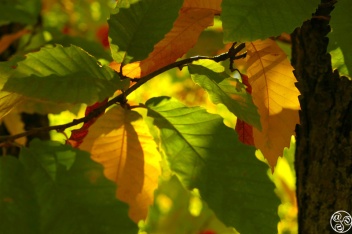
Iglesia de Santa María Magdalena

In the centre of Cazalilla is the town’s most significant building, the parish church, which stands out both for its volume and height as well as for the quality of its construction materials and its artistic beauty.

Aceites Azaharoliva

The olive oil mill of Aceites Azaharoliva is situated in a farmhouse whose construction dates back to the times of Queen Isabel II, when she gave a soldier she dearly trusted a manor in the lands of the town.

Torre de Calígula

This important and solid semicircular stone wall is a reworking of a cylindrical tower of great proportions. During the Andalusian era, Cazalilla belonged to the Cora de Jaén, with the name Qastalla.

Torre de María Martín

Also known as “El Torreón”, this tower is in the vicinity of the Cortijada de la Torre María Martín. The archaeological site is topped by the elevated circular medieval tower, about 7 meters in diameter, which rests on another construction with a square plan.

History of Marmolejo

The 200 archaeological settlements catalogued in Marmolejo are testaments of the occupation of these lands during Prehistory and Antiquity, the oldest dating back to the Paleolithic era, located on the terraces of the rivers.

Festivals in Marmolejo

Festivals in Marmolejo are Cabalgata Reyes Magos, Día de Nuestra Señora de la Paz, La Candelaria, Día de Andalucía, Carnaval, Semana Santa, Romería de la Virgen de la Cabeza, Fiesta y Romería de San Isidro and more.

Colecciones Museísticas

The Arjonilla Museum Collections are based in what was the Palacio del Marqués de la Merced, which was built in the late seventeenth century. The building is currently the focus of a project that began in 2014, having been inaugurated on August 13, 2018.

Torre del Homenaje

The oldest element of the Castillo de Macías ‘el Enamorado’. A work from the thirteenth century, made of ashlar with uniform chains, small dimensions and a proportionate structure, it sits on a rock plinth with a square base. Located on Calle del Castillo.

Torre de Cárdenas

This is an important military structure bordering the outskirts of the city. It is a type of coastal tower building, cylindrical in shape, which was built in the sixteenth century. At present, it is in a good state of conservation, after a restoration carried out in recent years. Located on the N-340a.

Iglesia de la Encarnación

The church was designed according to the Gothic lexicography of the early sixteenth century. Its plan consists of three naves, separated by cruciform pillars, covered with a Mudejar roof that, in the eighteenth century, was camouflaged with false ribbed vaults.

Ermita de Jesús

The seventeenth-century chapel retains the barrel vault and lunettes of its original construction. The dressing room of Jesús, and the interesting façade, that draws attention for the monochrome simplicity of the brick, the ascending verticality of lines, and the articulation of spaces, date to the eighteenth century.

Castillo de Macias El Enamorado

The castle is famous not as the site of military exploits, but because Macías ‘el Enamorado’ was imprisoned and murdered here. His love affairs inspired works by Lope de Vega y Larra.

Palacio Boleas

This eighteenth-century Baroque palace is located near the river. It has a stone façade and grand doors bearing a shield and royal crown, framed by a stone semicircle.

Casa del Juzgado

Also known as “Ayuntamiento Viejo”, this building has been completely renovated. Of its original construction, only a seventeenth-century portal, narrow and divided into three sections, remains.

Festivals in Lopera

Festivals in Lopera: Cabalgata Reyes Magos, La Candelaria, Día de Andalucía, Carnaval, Semana Santa, Fiesta a la Virgen de la Cabeza, Los Mayos, Romería de San Isidro and more.

History of Lopera

Lopera has its origins in the Bronze Age, with remains from this period having been found in the farmhouses of Almazán, Lanzarino I and Cuatro Hermanas. From the Iron Age period, remains of Iberian culture stand out, such as the deposits of Cerro de la Casa, Cerro de los Pollos and Cerro de San Cristóbal.

Palacio de San Telmo

This magnificent palace is one of Seville's most impressive buildings, and certainly the city's finest example of the baroque style. Situated to the south of the centre, between the Hotel Alfonso XIII and the river, its 40-million-euro, 10-year refurbishment finished in 2010. The palace is the seat of the Regional Government's President.

Ermita de Nuestra Señora del Carmen

This small hermitage has very simple architectural lines, and presents a white façade with a large access door, finished in a semi-circular arch, and crowned by a simple belfry. Loacted on Camino Ermita.