Latest Pages

Latest pages

We are committed to updating our pages as regularly as possible, allocating over half of our editorial resources to this essential task, to ensure that you can always find the latest, most reliable information on popular topics and places.

Here is a list with the latest pages that have been updated or created. Most recent are at the top of the list.

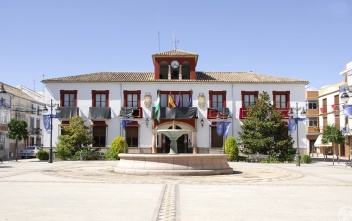
Ayuntamiento (Cortijo de las Mascaranas)

This building once belonged to Hermann Fischer, son of Hermann Federico Fischer, owner of the Ficsher House or Cortijo del Gobernador in the city of Almería. Since 2010, it has been the headquarters of the Huércal de Almería Town Hall.

Iglesia de Santa María

The church dates from the beginning of the sixteenth century and was erected as a parish on February 11, 1619. It brings together the fundamental characteristics of Mudejar construction, such as crushed brick, stone arches and wooden roofs.

Yacimiento Arqueologico de Bayyana

This archaeological site is a medieval city that corresponds to the Muslim occupation of the town. A large number of coins have been found at this site, which can now be seen in the Museum of Almería. The site continues to offer interesting insights as excavations are continuously carried out.

Centro de Interpretación Etnográfico

The cultural centre is situated on the ground floor of Centro Cultural Cortijo Moreno, with a museography that has been carried out by Rodolfo Caparrós, focusing on three main areas; the first analyses the historical circumstances that produced the urban bourgeoisie in Almería.

Iglesia de San Indalecio

The church was recognized as the Episcopal Headquaters in Rome by the Apostles at the beginning of the fourth century. During the Visigoth period, its Bishops attended the councils of Toledo and, in the High Middle Ages, already under Muslim domination, it was preserved until the late-eleventh century.

El Chorrilo de Pechina

An old deserted mining hamlet in the Sierra Alhamilla, where Exodus: Gods and Kings was filmed. For Game of Thrones, a new set was built representing Vaes Dothrak, the only city in the Dothraki Sea. Sir Jorah Mormont and Daarid Naharis rescue Daenerys Targaryen here in Episode 4.

Ermita de San Indalecio

The tiny chapel dedicated to San Indalecio, patron saint of the town, sits on the outskirts of the town and holds the oldest Pechina pattern image inside. Located on Camino Benahadux.

Iglesia de Nuestra Señora del Rosario

The church was built in the sixteenth century and is a very simple piece of architecture. Its front façade opens onto the Plaza de la Iglesia, whilst its other sides are exposed to vast open countryside.

Peña Flamenca El Yunque

A performance centre dedicated to flamenco dancing and singing. The centre regularly offers shows for the public and has even hosted flamenco festivals. Located on Calle Angustias.

Centro de Interpretación de la Naranaja

This Interpretation Centre of the Orange is a new establishment, built in 2014, that has been strategically designed and conditioned to show visitors the history and evolution of the orange and its impact on the region.

Balneario de Sierra Alhamilla

The Sierra Alhamilla Spa is situated on the slopes of the Sierra. It is believed that Romans and Arabs knew of the existence of this spring, and the well-preserved pools are a vestige of their time here.

Cerro Fuerte

Cerro Fuerte is an archaeological zone situated in an important rocky mass, which importantly includes a Roman settlement related to the mining exploitation of the area, and a megalithic necropolis belonging either to the Ancient Copper or Final Neolithic era.

Yacimiento Arqueológico Los Millares

The archaeological site of Los Millares is a prehistoric settlement from the Copper Age (3200-2200 BC), comprising the ancient town and its necropolis with areas of 6 and 13 hectares respectively. Researchers and scientists demonstrated in 2020 that Los Millares was the first city established in the entire Iberian Peninsula more than 5,000 years ago.

Torre Nazarí

The Nazarí Tower of Santa Fe de Mondújar dates to somewhere between the thirteenth and fifteenth centuries. It is a fortress tower or watchtower built for surveillance of the territory and defense from enemy attacks.

Puente Ferrocarril

In 1973, a new bridge was built, given the insecurity offered by the previous Puente de Hierro de Eiffel, due to the excessive weight of the trains loaded with ore. It was built according to more modern construction techniques, based on reinforced concrete.

Iglesia de Nuestra Señora del Rosario

A Mudejar-style temple, built in the mid sixteenth century, consisting of three naves with a basilica plan, with a main chapel differentiated from the central nave by an arch and a high choir at its feet. In 1577, carpenter Juan Fernández and mason Juan Alonso Jiménez both worked here.

Ermita Virgen del Carmen

The chronology of this chapel is difficult to pin down, but it resembles the qubbas or Muslim marabouts in its structure. They are buildings with a square plan, open on one side and crowned by a dome. Taking advantage of these ruins, in the middle of the nineteenth century.

Ermita de Mondújar

Erected at the beginning of the sixteenth century, the Mudejar-style chapel dedicated to San Antonio was most likely built on the remains of an old Muslim mosque, and of which only the masonry walls are preserved today along with the arch of the entrance door surmounted by a cornice.

Puente de Hierro de Eiffel

Puente de Hierro de Eiffel

The bridge was built in 1893 as part of the Linares-Baeza-Almería Line, and next to the station to connect Almería with the rest of Spain. It was designed in the studios of the engineer Eiffel, although some sources cite that it was the direct work of Eiffel rather than his pupils. The latest advances in wrought iron were used in its production, together with classic constructions such as quarry stone, reflected in its ten pilasters.

Ermita de la Cruz

The chapel has an open square plan with arches on its four sides, which supported the dome, today transformed into a hipped roof, and crowned with a cross. From it, you can enjoy excellent views over the orange groves and the Andarax River.