Alhambra, Granada - Fascinating Fact 5
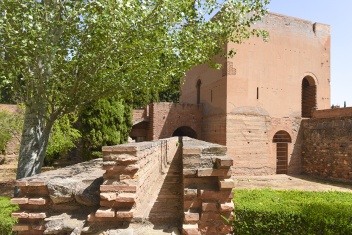
In Nasrid times, this eastern section of the fortified complex was the densely populated medina, with mosque, public baths and markets, grand mansions of high-ranking officials, and soldiers’ quarters.
Do you want to find out some little-known interesting facts about Andalucia’s most famous towns, cities and pastimes? Which films were shot in Seville, why the Mezquita was built with its pillared arches, which Beatle loved Almeria, who brought golf to Andalucia?
Our Fascinating Facts series are five snippet-sized unusual pieces of information about well-known places you’re likely to visit while you’re in Andalucia.
In Nasrid times, this eastern section of the fortified complex was the densely populated medina, with mosque, public baths and markets, grand mansions of high-ranking officials, and soldiers’ quarters.
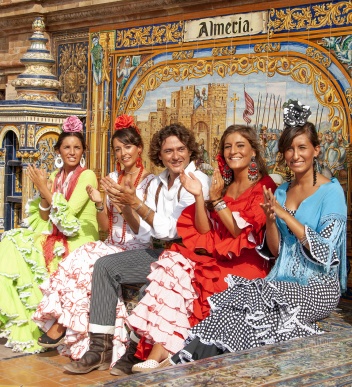
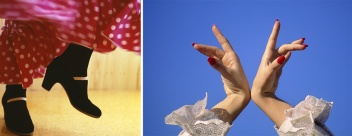
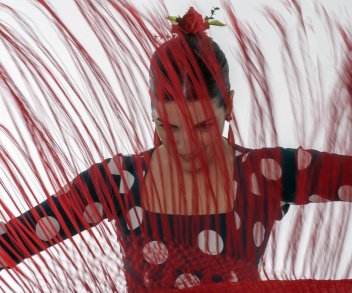
The traje de flamenca, or flamenco dress, worn by women at the Feria is the only regional clothing that changes according to fashion – colour, length, neckline, sleeve type, spot size etc. The original dress is said to have had four ruffles. More about Dress for the Seville Feria.
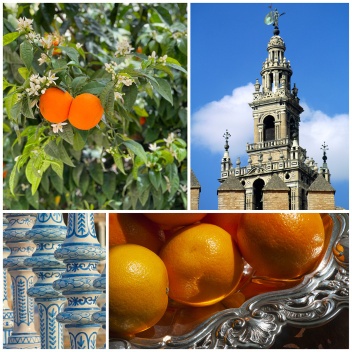
There´s a saying that Sevillanos are so astonished the British actually want to use their bitter oranges to make marmalade, that they reckon the pith is secretly used to make gunpowder.
Seville is a city of dualities. If you´re a football fan, as many Sevillanos are, you´re either a betico or a sevillista, supporting Real Betis Balompie (green and white strip) or Sevilla Futbol Club (red and white).
Fire festivals - Burning Bright Festive fire festivals in Andalucia. In December, as well as traditional Christmas celebrations, did you know that many Andalucian towns and villages host festive fire festivals.
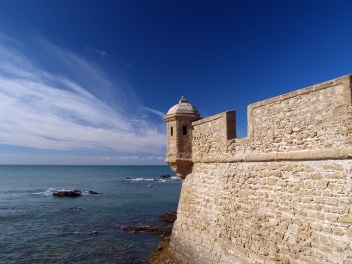
Cadiz was a key trading centre - it was Spain's main port in the 16th century - due to its central geographical location between Europe, Africa and South American.
Spain's first public golf course was in Cordoba. Pozoblanco, a small town in Cordoba province, was Spain's first municipal course; it was built in 1984.
Whether they like it or not, bullfighters enjoy celebrity status here in Spain. They're even richer and more famous than footballers - because facing off a huge, angry beast is so much more macho and impressive than kicking a small ball around a field. They often end up with (in)famous partners - witness Jesulin and Belen Esteban, permanent fixture on trashy TV shows, El Cordobes and our recent interviewee, fashion designer and TV presenter Vicky Martin Berrocal, Fran Rivera was married to the Duquesa de Alba's daughter, Eugenia. Cayetana, a big bullfighting fan herself, maintains a close relationship with her ex-son-in-law.
One of the curious things about Jerez, is that alongside the wealthy (though less so lately) equestrian sherry barons, there is a vibrant flamenco tradition - two very different aspects of Andalucian culture.
Although a palace was built over them in the 16th century, Jaen´s 11th-century hammam (Arab baths) have survived another 400 years, and are now the largest baths open to the public in Spain. They were probably constructed on top of earlier (Roman) baths which used local hot springs - you can see Roman ruins through a glass walkway in the basement of the palace, on your way to visit the baths.
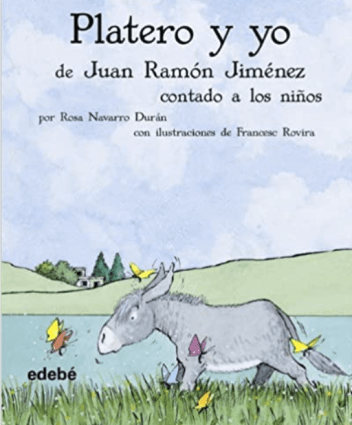
Juan Ramon Jimenez, author of the hugely popular Platero y yo, prolific poet, and winner of the Nobel Prize for Literature in 1956, was born just outside Huelva. Controversially, he wrote erotic poems about his sexual experiences with nuns from the Holy Rosary Order, with whom he worked in a Madrid nursing home. The poems were only published in 2007, nearly 50 years after his death.
Spain´s most famous 20th-century literary figure, Federico Garcia Lorca, was murdered by Fascists, probably for his political leanings and sexual orientation, in Granada, in 1936 - just before the outbreak of the Civil War. Although renowned throughout the world, Lorca´s name was banned under Franco and he was apparently forgotten.
Sometimes historic cities have places filled with local lore, steeped in tradition and history. Plaza de Potro is one such place - the "potro" is a colt on a fountain in the square, which hosted animal markets in medieval times. It has a former inn, the 15th-century Posada del Potro, which is mentioned in Don Quixote as a "den of thieves", and where Cervantes most probably stayed when he visited the city (he lived here as a child).
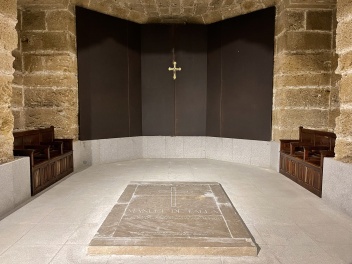
A ubiquitous name around Cadiz which the visitor cannot fail to notice, is that of Manuel de Falla. One of Spain´s most famous composers, and a friend of Lorca, Falla has a theatre named after him, and is buried in the crypt of the cathedral, worth visiting for its extraordinary acoustics.
During the Napoleonic wars, many Andalucians took to the hills to organise resistance movements. These often took the form of banditry, attacking soldiers or rich travellers as they took the isolated, treacherous mountain road through the Sierra de Ronda from inland Andalucia down to the coast.
At the other end of the spectrum from San Juan, the Cueva de Nerja Festival (International Festival of Music and Dance), also in summer, is one of the most important cultural events on the Costa del Sol.
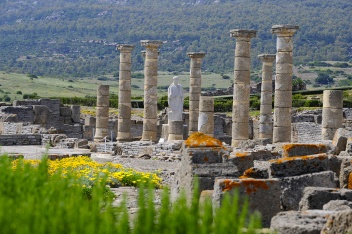
Ever heard of garum? This strong, fish-based paste was highly prized by the Romans, and was used as a cooking sauce by the gastronomy-loving race. One of the most famous producers of garum was a town called Baelo Claudia, located near Bolonia, a seaside village just north-west of Tarifa.
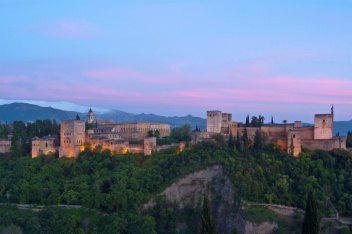
The Alhambra is the second-most-visited monument in Spain, a complex of Arabic and Christian palaces and gardens. Its exquisitely inscribed arches and beautifully detailed ceramic tiles, along with the perfect proportions of colonnades and pools, create a place of ethereal beauty. Here we take a look at well-known and less familiar aspects of what was once a self-contained city.
Within the Nuestra Señora de la Soledad Cemetery in Huelva lies a grave with a curious history. The man buried there changed the course of the Second World War – even when he was already dead.
If you've never spent Christmas in Andalucia before, then you're in for a treat. From the joyous musical specialities of the season, to festive decorations both traditional and contemporary, it is a great time to be in southern Spain. Eat, drink and be merry - and dance round a bonfire in a pagan ritual, if you're really lucky.