Palacio Bucarelli, Sevilla
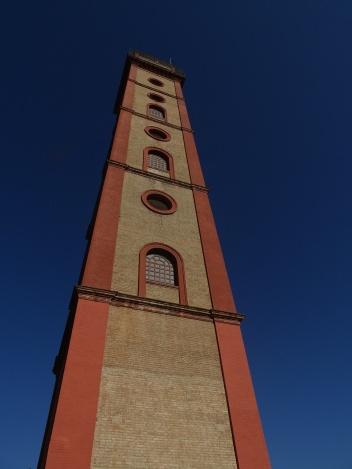
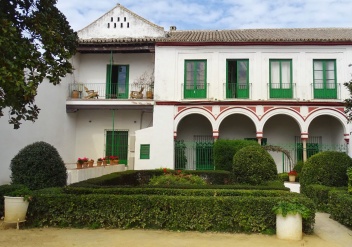
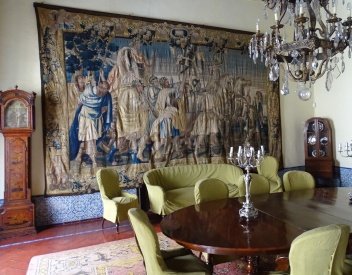
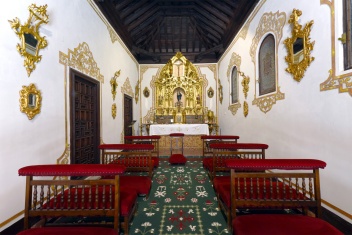
Seville has its fair share of magnificent family-owned palaces – In summer 2023, another such monument opened to the public for the first time: Palacio Bucarelli.
Under the Nasrids, it was the site of the early 14th century Palace. Later, when the Catholic Monarchs were besieging Granada, Queen Isabella I of Castile vowed that, after the victory, she would build a shrine in the Alhambra to her beloved Saint Francis.
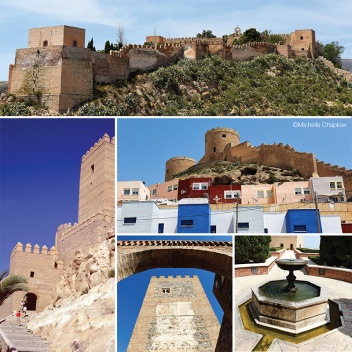
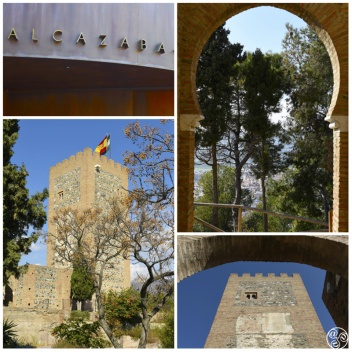
Archaeological excavations in recent years have verified the Roman Empire’s presence both inside and outside of the Alcazaba’s walls, and yet its current silhouette can be traced back to its founder, Umayyad Caliph Abd al-Rahman III (who also built Medina Azahara). According to an inscription found on marble which is now housed in the (Archeological) Museum of Almería, he ordered it to be built in the latter half of the 10th century.
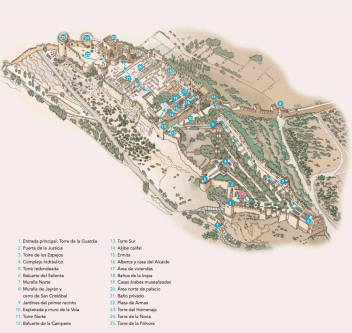
The interior of the Alcazaba is divided into three walled recintos, or compounds, spreading up the long slope from the lowest part near the entrance; the first two are Islamic, and the third is Christian. A long fortified wall, the Muralla de Jayran (or Jairan), named after the 11th century king who built them, stretches from the Alcazaba, down the hill and up the other side to the Cerro de San Cristobal. From here the panoramic views take in the Alcazaba itself, as well as the city and port stretched out below.
This ninth-century cave hermitage, carved into the rock face, has remained hidden from visitors until recently. Today, it is still used for religious purposes by the Brotherhood of the Virgen de la Cabeza. The town of Ronda continues to celebrate a pilgrimage on behalf of the Virgen de la Cabeza that incorporates a visit to the site.
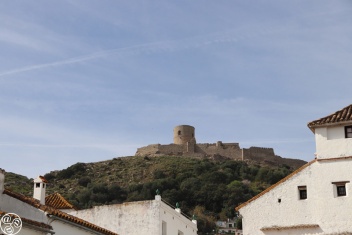
The castle of Jimena de la Frontera is the village’s most impressive and culturally significant monument, both for the amazing views from its grounds and the top of its keep, and for the rich history of the site. Declared a National Monument in 1931, the castle stands strategically on the “Cerro de San Cristobal” (the Hill of Saint Christopher), on the west side of the village.
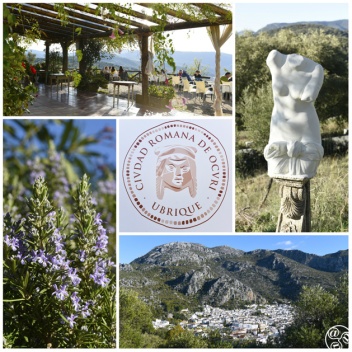
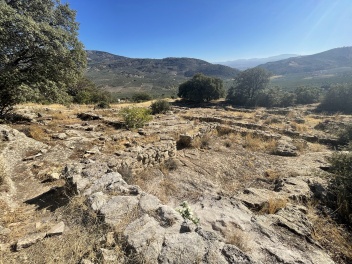
The Roman City of Ocuri sits on the limestone hill of Salta de la Mora, in the Sierra de Grazalema Natural Park, 1km from Ubrique. With the hill descending sharply on all sides of the site, it enjoys spectacular mountain views and feels completely isolated - a good choice for anyone wanting a more immersive glance into Roman antiquity.
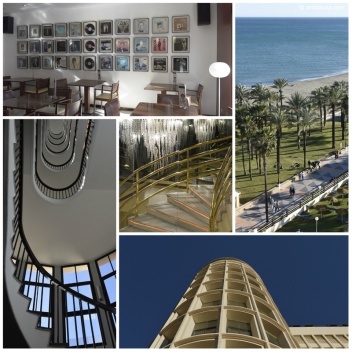
Although many locals laughed at the seemingly bizarre idea of building a five-star hotel on the beach in a small fishing village, the luxurious Hotel Pez Espada opened for business on Sunday 31 May 1959. The history of the Costa del Sol, and especially the history of Torremolinos, would be incomplete without referring to the hotel, for it became renowned for its famous guests and its illustrious galas and parties.
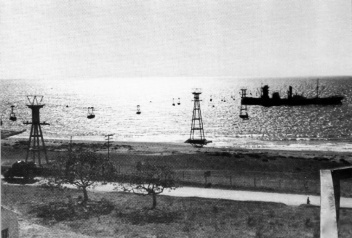
Playa el Cable (Cable Beach) takes its name from the overhead cable "El Cable Teleferico" runway that transported buckets of iron ore down from the Peñoncillo mine on the Sierra Blanca to ships moored offshore. If you look out to the sea you can't miss seeing the large anchor end tower of the line.
The castle was built in the middle of the thirteenth century and remained in use until the early sixteenth century, when it lost its military functionality. During the seventeenth and eighteenth centuries it was used again, as headquarters for troops during the conflict of the Portuguese Restoration and the French occupation in the War of the Independence.
When visitors see the magnificent baroque entrance to this vast stone building, most assume they're looking at yet another of Seville's palaces or grand residences. In fact, its origins are more prosaic: a tobacco factory, albeit one of Spain's largest buildings.
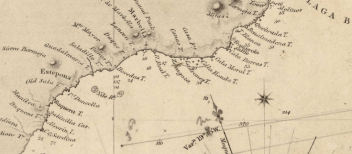
There are about 100 different watchtowers (Torre Vigia or Torre Atalaya or Torre Almenara) along the coast of Southern Spain. Some are of Moorish origins others from date from the later Christian re-conquest period. All with the purpose of looking out for invaders from the South. They have lasted the centuries with remarkable strength.
The Casa de las Tejerinas is a stately house in the centre of Estepona in the Plaza de los Flores. It was owned by the Tejerinas sisters and became a hospital for the poor. It was taken over by the town hall and renovated in the 1980's to become the 'Casa de la Cultura' where cultural events such as art exhibitions, courses, lectures took place.
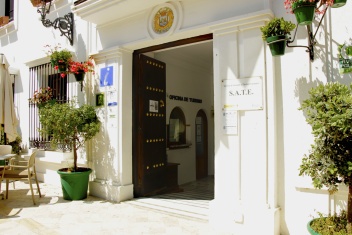
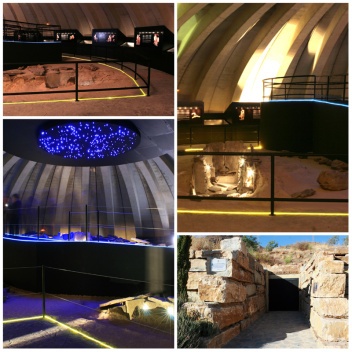
Inside five small dolmens (standing stones) can be viewed. They are original and date from about 3,000 BC. Also on display are a number of pottery vessels, stone tools, arrowheads, axes, personal ornaments, necklace beads made of semi-precious stones and perforated seashells. The skulls and skeletons and other bones on display are reproductions as the originals are preserved.
The Moorish castle is the landmark of Velez-Malaga and worth visiting especially for the view and orientation. Access can be by car, there is ample parking inside the grounds. You can visit by the footpath from Calle Forteleza Alta which rises through woods behind the Iglesia de Santa Maria.
Signposted off the road to Illora, about 7km east Montefrio, is an intriguing and unmissable archaeological site, the Peñas de los Gitanos, which has evidence of human settlement from Neolithic times to the Bronze Age.
The original path was built between 1901 and 1905 by the Sociedad Hydroelectrica del Chorro (Chorro Hydroelectric Society). A pioneering project to take advantage of the 100m drop in the river Guadalhorce required the construction of a small dam.
Just outside Antequera you can visit three 5,000-year-old dolmens: Menga Dolmen (the largest in Europe) and Viera Dolmen, which are both located just outside the town, while El Romeral Dolmen is a few km away. These three prehistoric burial chambers represent some of the largest and most complete megalithic structures in Europe.
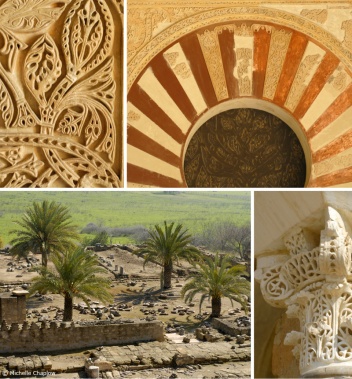
Madinat al-Zahra was declared a UNESCO world heratige site on 1st July 2018. We are in the year 400 of the Hegira, 1010 AD of our era. On the southern slopes of Jebel al-Arus, the Bride's Mountain, the marble, jasper and precious metals of the city of Madinat al-Zahra gleam in the morning sun among silver-leafed olive groves.