Granada City Museums
Museums in Granada City: Museo de la Alhambra, Basilica de San Juan de Dios, Cartuja de la Asunción, Casa de los Pisa, Casa-Museo Angel Barrios, Casa- Museo Federico García Lorca and more.
Córdoba Province Museums: Museo Municipal, Museo Histórico Local, Museo Histórico-Arqueológico, Museo Parroquial and more.
Jaén Province Museums: Museo Catedralicio, Museo del Alto Guadalquivir, Museo de la Carolina, Museo Arqueológico and more.
See the Museums in Sevilla city and Sevilla province: Museo Arqueológico de Itálica, Museo de la Ciudad, Museo y Necrópolis Romana and more.
Huelva Province Museums: Colección del Santo Rosario, Museo Municipal, Museo Ferroviario de Rio Tinto, Museo Minero and more.
Museums in Cádiz province: Museo Municipal, Museo Tesoro Parroquial, Museo Monográfico de Baelo Claudia, Colección de Relojes and more.
Andalucia, with its rich history and cultural heritage, is a treasure trove for art and history enthusiasts. The region's cities, each with its unique character, boast a wide array of fascinating museums that offer a glimpse into the region's past and present.
Other museums in Málaga City and province: Museo de la ciudad de Antequera, Museo de Benalmádena, Museo de Nerja and more.
Felipe Orlando-García Murciano, the prestigious Anthropologist and artist, who died in April 2001 at the age of 90, inherited a collection of pre-Columbian relics from his grandfather.
The Duquesa de Alba was one of Spain's most famous aristocrats, and one of Seville best-loved personalities, until her death in 2014. With palaces and castles all over Spain, Cayetana was happiest in her home in the historic city centre, Casa de las Dueñas.
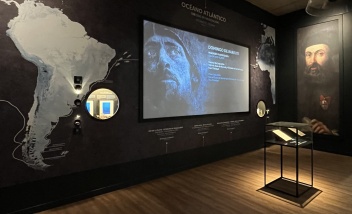
In 1519 Portuguese explorer Ferdinand Magellan set sail from Seville with a fleet of five naos (carracks or carvel-built wooden sailing ships) to find the Molluca spice islands, in modern-day Indonesia. Three years later, only one of his naos returned, the Nao Victoria, captained by Juan Sebastian Elcano – Magellan had been killed in a conflict in the Philippines.
The Museo del Bandolero closed due to the Covid Pandemic in March 2020. The entire colection was sold in October 2020 to the Andalucia Bandit Museum in El Borge, La Axarquia Malaga.
Museums include Centre for Threatened Species, ciCUM centre offers visitors a broad perspective of the forest culture, Visitor Centre for the Tower of Vinegar and the historic olive oil mill La Almedina.
There are several interesting museums in Ubeda including Museo Arqueológico de Úbeda, Paco Tito Pottery Museum Memoria de lo Cotidiano, Casa Arte Andalusí, Casa Museo “Granada Venegas”, Centro de Interpretation “Olivar y Aceite”
The tower that defended the Puerta de Úbeda houses this interpretation centre. Inside, visitors can discover everything related to the complex defensive system of the city of Baeza and its medieval history.
The Sánchez Valenzuela family commissioned the construction of this palace at the end of the fifteenth century. Years later, they ceded the palace to the religious order of the Mínimos de San Francisco de Paula. After the disentailment of Mendizábal, it became the city’s Casino.
Above the door we find a shield, the text of which translates to “Deposit for stallion horses”. The building originally housed various stallions available for the stud season. Today it is the Multiple Use Enclosure, which was inaugurated in March 2013.
This palace, built in 1804 by José Cayetano Rubín de Ceballos, was owned by the family until 1973, the year in which it became the property of Opus Dei for Christian formation and a spiritual retreat house. The interior has been enlarged by the acquisition of adjoining buildings. It has a central patio and a recently built chapel.
The city’s bullring was built in 1892 with a capacity for 7,500 people, paid for by Cristóbal Acuña Solís. For its construction, materials from other demolished buildings were used, such as the convents of La Victoria and San Francisco and the remains of the old square. It was inaugurated on May 18, 1892, and a century later it was rehabilitated.
This eighteenth-century construction was used as the residence of the Marquises of Villareal. It was acquired by the Junta de Andalucía in the 1980s, although it is now in a ruined, abandoned state.