Fuente de los Cien Caños
Located in the Peña de Hierro Mine in Nerva, this is a site unveiling the mining history of Spain
Located in the Peña de Hierro Mine in Nerva, this is a site unveiling the mining history of Spain
The Tajos del Alcázar are a collection of formations, a natural monument in Malaga
The Cañón de las Buitreras is the strikingly named Gorge of the Vultures, after the colony of griffon vultures that nest in the area. The gorge itself is impressive, with often near-vertical sides at times reaching 200m high. In the bottom of the gorge is the Guadiaro river, which has eroded the limestone rock.
The Monte Jabalcuza is a part of the nature trails in Malaga, perfect for spotting wildlife.
Located in the Peña de Hierro Mine in Nerva, this is a site unveiling the mining history of Spain
By the beach, and part of Doñana Natural Park, the Acantilado del Asperillo is home to multiple endangered species.
Part of Doñana Natural Park, the Acebuches del Rocío showcases an array of olive trees, some of which have survived for more than 600 years.
The Pino Centenario Parador de Mazagón is part of Doñana's restoration programme. It has become popular due to it's branches extending out creating a shape that imitates a creepy face.
By the beach, and part of Doñana Natural Park, the Acantilado del Asperillo is home to multiple endangered species.
By the beach, and part of Doñana Natural Park, the Acantilado del Asperillo is home to multiple endangered species.
Located in the Peña de Hierro Mine in Nerva, this is a site unveiling the mining history of Spain
Cueva de Ambrosio is an archaeological site, declared as a world heritage site.
Encina de la Peana is the largest tree in Andalucia
Natural Monument, part of a rare species of trees
The Peñó de Bernal is a unique part of Almeria's natural parks.
‘Threshing circles’, or eras, are normally circular surfaces paved with slate slabs. They are typically situated in areas where there is a strong wind, which makes it easier to separate the grain from the straw.
The Cañón de las Buitreras is the strikingly named Gorge of the Vultures, after the colony of griffon vultures that nest in the area. The gorge itself is impressive, with often near-vertical sides at times reaching 200m high. In the bottom of the gorge is the Guadiaro river, which has eroded the limestone rock.
The Spanish fir, pinsapo in Spanish (abies pinsapo), is a rare tree most commonly found in the Sierra de Grazalema Natural Park. The pinsapo de las Escaleretas is the oldest pinsapo on record at over 350 years old. Its dimensions are impressive: it is 26m high, with a trunk measuring 5m in its circumference and branches that cover an area of 200m².
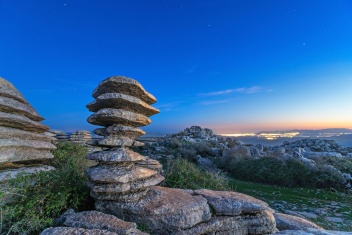
Within the Torcal de Antequera Natural Area is this protected geological feature, the Tornillo del Torcal. Its name - the Screw of Torcal - comes from its distinctive appearance, as its limestone layers have been eroded making them look like the threads twisting around a screw. It is used as a symbol for the Torcal Natural Area.
The Cárcavas de Marchal Natural Monument is a spectacularly eroded clay massif covering 5.2ha. For many years people have been carving out caves in the Cárcavas de Marchal for habitation. Located some 55km east of Granada city, Marchal is south of Purullena, off the A92 motorway.