Main Sights

Puerto Del Puente (Bridge Gate)

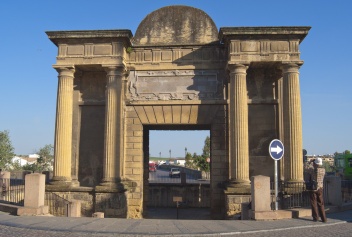
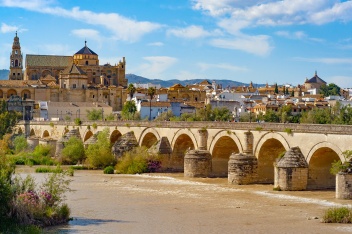
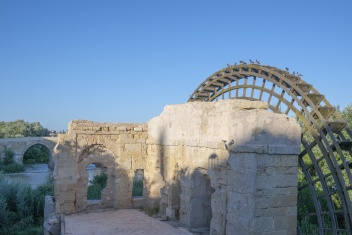
At the north end of the Roman bridge formerly used to enter the city enclosure near the Mosque, rises the Puerto del Puente or Bridge Gate. It was completed in the days of Philip II. The present triumphal arch is the work of Hernán Ruiz III and replaces what was first a Roman gate mentioned at the time of Julius Cesar and later a Moorish gate. A documented restoration took place in 720 AD. Today it is a traffic island.

City Walls

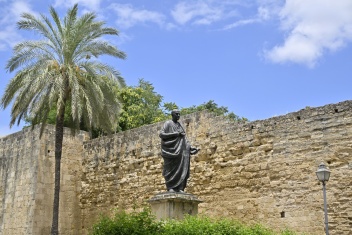
The walls which used to mark the boundaries of the Jewish quarter extended virtually to the Arab walls. The latter enclose the Alcazar gardens and continue along the river bank. These stretches of wall are among the better conserved in the city's fortified enclosure, although they are from a later period.

Plaza del Potro

Just a few minutes away from the Mezquita, to the east along calle Luis de la Cerda/Lineros, is the Plaza del Potro (Square of the Colt), a long, rectangular square which slopes down towards the nearby Guadalquivir river to the south. It is named after the 16th-century fountain in the plaza (1577).

Diocesan Museum (Palacio Episcopal)

This recently created museum is located at the 15th century Episcopal Palace, and is a beautiful building with a cloister of several storeys, a chapel and dining-room, as well as a hall dedicated to artists from Cordoba and a gallery dedicated to mediaeval art, as well as tapestries and collections of psalm books from the Cathedral.

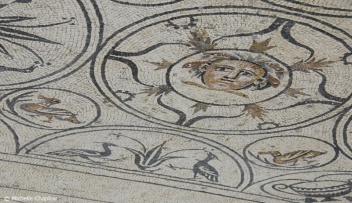
Roman Villa, Marbella

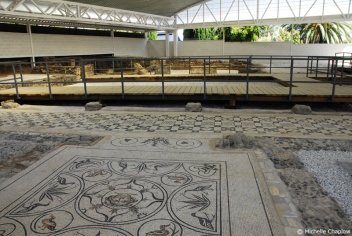
The ancient site at Rio Verde may have been part of the Roman town of Cilniana. It now houses the remains of a late 1st century AD Roman villa. Sadly all that is left is the floor and a small portion of the walls of the villa (the highest at 1.2 metres). However, fortunately for us it is a floor unlike any other - embellished with black and white mosaic tiles in patterns never before seen in a Roman Villa.

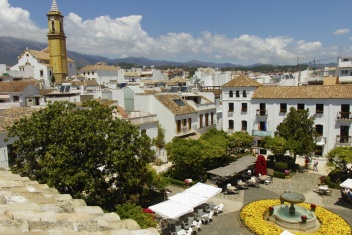
Old town and Orange square

Partially surrounded by the ruins of an old Arab wall with narrow white washed streets, old churches and squares, as well as lots of fascinating shops and boutiques At the heart of the old town is Orange Square which dates back to 1485

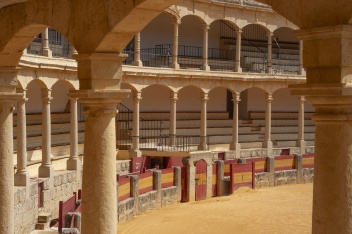
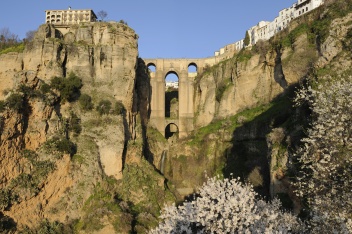
Convento de Santo Domingo, Ronda

Built on Arabic foundations at the instigation of the Reyes Catolicos after the fall of Ronda in 1485, this imposing structure on the far side of the Puente Nuevo has been rebuilt over the centuries in Mudejar (post-Reconquest Arabic), gothic and Renaissance styles. It has been, variously, a Dominican convent, a private mausoleum for the Moctezuma y Rojas family and, sporadically, a tribunal for the Inquisition.

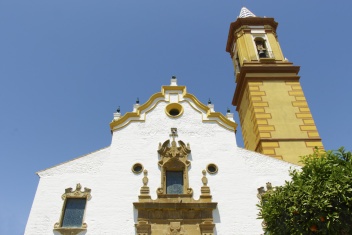
Castillo de San Luis

There is little left to see of the great castle which once stood at the heart of Estepona, and what remains is not now readily apparent, but it is possible to trace the ruins around the high ground. Its construction followed the seizing of the town in 1457 by Enrique IV. He also built new defensive towers along the coast.

Plaza de las Flores

Plaza de las Flores has had a number of names over the years, beginning as Plaza Real, it became in turn Plaza de la Constitución, Plaza de José Antonio and finally (at least for now), Plaza de Las Flores. They were great times for the makers of street signs. Somewhere along the way it was also known briefly as Plaza de Abastos (Provisions Square), where the markets alternated with bullfights.

Convent of Santa Isabel la Real, Granada

The Convento de Santa Isabel la Real was founded by Queen Isabella of Castile after Granada was conquered, on the site of the Moorish Palace of Dar al-Horra, a small part of which still exists.

Puerto Serrano - Main Sights

Puerto Serrano, a charming Andalusian village, is a hidden gem nestled in the province of Cádiz. With its rich history and stunning architecture, it offers a captivating glimpse into the past. The village's two main landmarks, the Church of Santa María Magdalena and the Molino de Siré, stand side by side, showcasing the region's Baroque and Neo-Classical styles. Beyond these architectural wonders, Puerto Serrano boasts a vibrant cultural heritage, evident in its traditional festivals and archaeological sites. Whether you're exploring the historic streets, admiring the religious art, or immersing yourself in the local traditions, Puerto Serrano promises an unforgettable experience.

Carrera Del Darro, Granada City

Now we are ready to take one of the most picturesque and romantic walks in Spain, along the Carrera del Darro, the cobble-stoned street which over hangs the river and which was once one of Granada´s main arteries, leading to the vanished gate of Guadix and, from there, to the town of that name in northeastern Andalucia. First we pass old Granada´s last remaining arched bridges.

Church of San Pedro & San Pablo, Granada

The Church of San Pedro & San Pablo hails from the Renaissance period while en route to the Plaza Nueva are the Arab baths dating from the 11th century. Behind the ruins of El Cadi Bridge stands the Mudéjar Church of Santa Ana with a Platereque portico and tower of glazed tiles which was inspired by Arab minarets.