Main Sights

Barrio Santa Cruz, district of Seville city

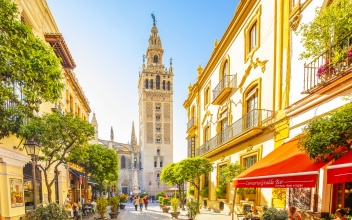
This is the first barrio (area or neighbourhood) tourists head for, and with good reason. It is the most picturesque and delightful part of the city, with narrow winding cobbled streets and whitewashed houses, where you can sit outside a bar, enjoy some tapas and watch the world go by, or wander through centuries-old gardens and relax on beautiful tiled benches.

City Walls and Gates of Seville

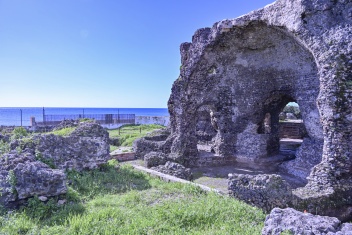
As you arrive in the city, look out for remnants of ancient stone walls marooned in the centre of busy roads, plus an impressive, well-preserved 400-metre section in Macarena, near the Andalucian parliament building. These are the remains of the city walls, or murallas, dating from the 12th century - Seville was once the most strongly fortified city in Europe.

Metropol Parasol

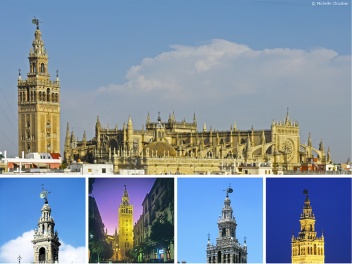
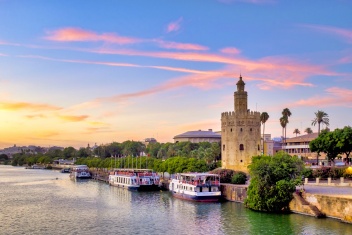
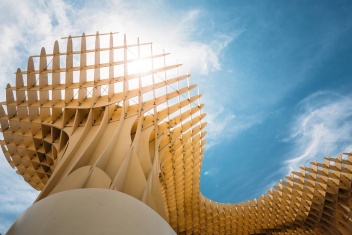
Known locally as Las Setas (the Mushrooms), due to its short stems and wide caps, this is the most ambitious, expensive and controversial urban project in Seville since Expo 92. Opened in 2011, and designed by German architect Jurgen Meyer H, it is now one of Seville's architectural icons, along with the Giralda, Torre del Oro, Plaza de España, and the Alamillo bridge.

The Alhambra - The Alcazaba

The Alcazaba, or fortress, is the oldest part of the Alhambra. It was built in the mid-13th century by the Sultan Alhamar, the founder of the Nasrid dynasty, after he fled from northern Andalucia and established what was to be the last Moorish stronghold against the Christian crusaders.

Corral del Carbon, Granada

The Arabic Word bib means gate and rambla river bank. Until the end of the 19th century, there stood, at the plaza´s east end, a large Moorish gate which gave the place its name - gate of the strand, because it stood on the sandy bank of the river which now flows unseen beneath the Calle de los Reyes Catolicos.

Generalife gardens of the Alhambra

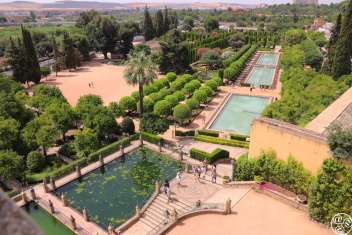
After the city was conquered, the Generalife was granted by the Catholic Monarchs to the Granada Venegas family. The promenade leads to the "Patio de la Acequia" which is the most celebrated spot and the heart and soul of the palace grounds.

The Alcaicería, Granada City

The Alcaiceria home of the Great Bazaar of Granada, was originally a series of streets between Plaza Nueva and Plaza Bib-Rambla, bursting with stalls selling Arabic silks, spices and other precious goods. Nowadays the only remaining section is Calle Alcaiceria, beginning just off the Calle Reyes Catolicos, and extending back as far as the Cathedral. It is an area rich with history and local culture, still packed with interesting, exotic things to buy.

El Albaicín, Granada

El Albaicín is the old Moorish quarter of the city. It's located on a hill facing the Alhambra and there are dramatic views of this area from the palace's famous rose gardens. The Zirid Monarchs first established their court here in the 11th century although little remains from this era today, apart from some crumbling remains of the wall.

Church of San José, Granada

The Church of San José is also worth visiting close by as it is on the site of the Great Mosque of La Alcazaba and the minaret belongs to caliphal architecture, the only one preceding the Almoravid type. It is here that the 'Christ of Silence' by José de Mora is kept. All the churches in the Albaicín have Mudéjar traces in their 16th century construction.

Granada City Cathedral

The Cathedral is located in the centre of the Muslim area and dates back to 1523. It has a nave and four aisles, a crossing and circular apse. Alonso Cano built the main façade with sculptures by Duque Cornejo, Risueño and Verdiguier while the only tower of the two planned ended up half finished. On the northern side, there is La Puerta del Perdón, a magnificent work of Diego de Siloé who also built La Puerta de San Jerónimo.

Seville Gate

The Gate of Seville is of considerable historical interest standing as an original fortified tower and an early entry gate to the Alcazar or fortress from the west. Fragments date back to the 10th century. The wall here was erected by Christians in the 14th and 15th century along with the barbican and moat.

Palacio de Viana

This Palace, which was declared a National Monument and important Artistic Garden, has a surface of 6,500 m2, more than half of which is occupied by the garden and the rest by a building with two floors and two little entresols.

Tower of La Calahorra

The Tower of La Calahorra rises up at the south of the Roman bridge, the far end from the city centre. It is a fortified gate originally built by the Moors (Almohads) and extensively restored by King Enrique II of Castile in 1369 to defend the city from attack by his brother Pedro I the Cruel from the South. It was origionally an arched gate between two towers. Enrique II added a third cylindrical shaped tower connecting the outer two.

Cordoba City Museums

Museums in Cordoba City: Museo de Joyerá Regina, Alcázar de los Reyes Cristianos, Museo Arqueológico, Museo de Bellas Artes, Museo Julio Romero de Torres, Museo Diocesano de Bellas Artes, Museo Monográfico Madinat Al-Zahra and more.