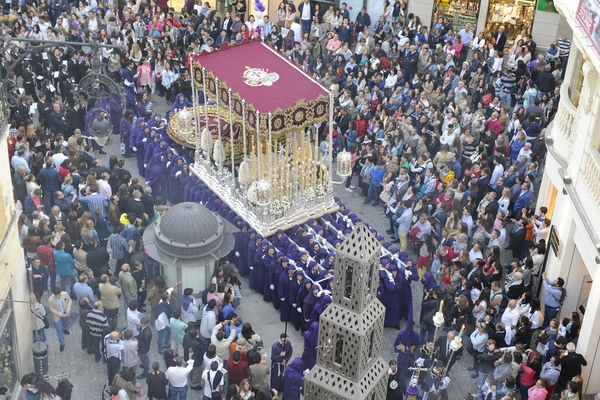
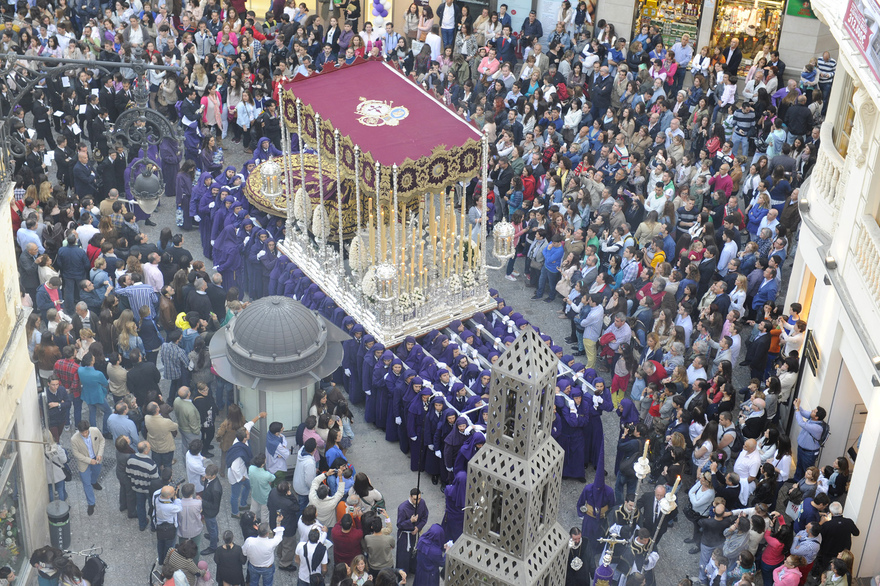
 Pasos - The actual processions that parade through the streets of towns and cities throughout the country. © Michelle Chaplow
Glossary of Holy Week terms
By Brenda Padilla and Fiona Flores-Watson
Glossary of Holy Week terms. Know your capa, capirote and capuz, from your pasos and penitentes.
Semana Santa, one of the most breathtaking and deeply rooted celebrations in the world. Whether you're a first-time visitor or a seasoned traveller, experiencing Holy Week in Spain is an unforgettable journey through history, culture, and devotion.
Taking the time to read our glossary of terms for Holy Week in Andalucia will give you that extra edge, so here we go!
Canasta - wooden base structure of float
Capa - The cape worn in Holy Week processions.
Capataz - the man who directs the costaleros
Capirote - the cone-shaped head dress worn in Holy Week processions.
Capuz - the hood part of the head dress worn by those participating in Holy Week processions.
Cofradías - Catholic groups dedicated to religious training, worship and charity that focus on penitence and show their penitence publicly during Semana Santa processions as they carry floats through the streets.
Costaleros - members of cofradías / hermandades who carry the floats through the streets.
Cruz de Guía - the cross that marks the start of the procession
El Cautivo - Statue of Christ with his hands tied, after being arrested
Estandarte - embroidered standard or banner carried in the procession, usually near the start but also at other points, bearing the insignia of the hermandad
Faja - a type of corset that float bearers wear in order to protect their backs as they carry the heavy Holy Week floats through the streets.
Hermandad - brotherhood, parish church association. Organises the Semana Santa procession.
Hermano - member of hermandad (brotherhood)
Hermano/(a) mayor - most senior member of the brotherhood
Imagen - life-size representations of Jesús and Mary that are paraded through the streets. Works of art carved from wood by master craftsmen
Llamador - the hammer used by the capataz to knock on the paso and indicate that it should be lifted up by the costaleros
Madrugá[da] - night of Holy Thursday/early morning of Holy Friday, a special night in many cities, when the most revered pasos come out, for example in Seville.
Manola - Lady wearing a black mantilla (long lace veil), black dress and crucifix necklace, black gloves and shoes, and carrying a rosary. Read more detailed description on processions explained in detail page.
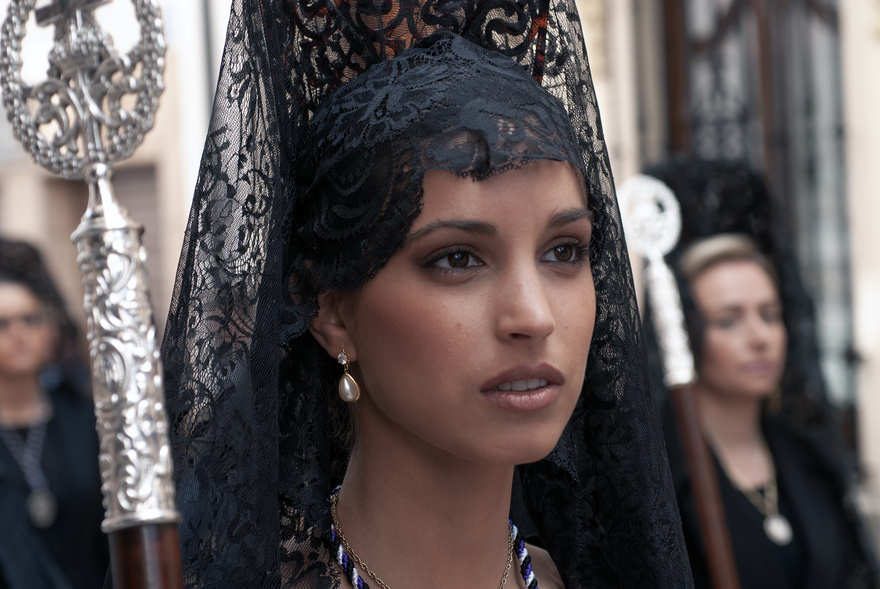 Manola - Lady wearing a black mantilla (long lace veil), black dress and crucifix necklace, black gloves and shoes, and carrying a rosary
Manta - velvet embroidered cape worn by the Virgin figure. The embroidery is all done by hand, using real gold and silver thread
Misterio - tableau of various figures (Jesus, Roman soldiers, Pontius Pilate) on a paso
Monaguillo (meaning small monk) - altar boy or girl - may carry silver staffs, lanterns or incense-holders near the front of the procession
Nazareno - hermano (member of brotherhood association) who walks in the procession, wears a long tunic, robe and cone-shaped pointed hood with eye-holes
Palio - embroidered canopy supported by pillars on top of the paso (see Manta)
Pasos- elaborately-decorated float that carries the statues of Jesus or the Virgin Mary, and sometimes other figures too
Penitente - hermano who carries a wooden cross, sometimes barefoot, as an act of penitence
Pregón - speech given throughout Holy Week and also at different points during the year
Pregonero - a person who delivers a pregón
Procesión - the parades of pasos (see definitions) that make their way through the streets in Holy Week
Saeta - soulful, flamenco-influenced songs performed by solo singers, often from balconies, addressed to the Virgin or Jesus during processions
Túnica - the robe that Nazarenos wear under their capes.
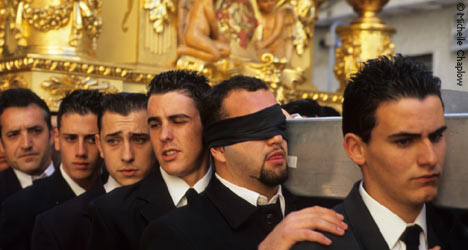 |
| Members of the Cofradías carrying the floats through the streets. |
Semana Santa dates
Semand Santa dates for the next few years are in the info box on our Semana Santa home page
Guide to Holy Week / Semana Santa in Andalucia
Semana Santa processions explained in detail