Latest Pages

Latest pages

We are committed to updating our pages as regularly as possible, allocating over half of our editorial resources to this essential task, to ensure that you can always find the latest, most reliable information on popular topics and places.

Here is a list with the latest pages that have been updated or created. Most recent are at the top of the list.
Buddhist Stupa

The Benalmádena stupa was designed to be the largest Buddhist stupa in the western world. The story behind the stupa goes back to 1990 when a Buddhist master came to Spain to give talks to the faithful in Vélez-Málaga. In Vélez, there is a Buddhist meditation centre.

Benalmadena Pueblo

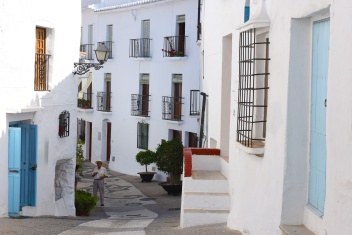
Benalmádena Pueblo is one of the most popular tourist destinations in Malaga. The town, which has retained the ambience of a sleepy white Andalusian village, is 280 meters above sea level. The old town is a maze of narrow, whitewashed cobble streets adorned with displays of coloured geraniums spilling out of wall-mounted plant pots.

Festivals in Benalmádena

Benalmadena is known for its full calendar of all-year-round festivities and cultural celebrations, from organized art and sporting events to traditional and religious processions - all of which give life and vitality to this cosmopolitan town.

Huesa

Huesa, a town of approximately 2,500 inhabitants, is situated amidst olive groves in an area known for cultivating olive trees. The area produces the ‘Sierra de Cazorla’ extra virgin olive oil.

Palacio del Deán Ortega

The palace was ordered to be built by Fernando Ortega Salido, Dean of the Catedral de Málaga and Cantor of the Real Colegiata Iglesia de Santa María de los Reales Alcázares and first Chaplain of the Sacra Capilla del Salvador.

Palacio Marqués de Mancera

An example of a turreted palace house of medieval heritage, an anachronistic symbol of old warrior lineages, dating to the sixteenth and seventeenth centuries. Residence of Pedro de Toledo y Leiva, First Marquis of Mancera, Captain and fifteenth Viceroy of Peru. /p>

Palacio de los Condes de Guadiana

The Palace of the Counts of Guadiana was built in the last years of the sixteenth century, and is organized around a small central courtyard. On the outside, its façade is decorated with balconies crowned by Mannerist style split pediments.

Palacio Vela de los Cobos

The palace was designed in 1551 by architect, Andrés de Vandelvira. To this day it remains the habitual residence of the family that has owned it since it was purchased by their ancestor, Ignacio de Sabater y Arauco, in 1873 who undertook a sumptuous refurbishment of the interior. /p>

Palacio de Juan Vázquez de Molina

The construction of the palace of Juan Vázquez de Molina began around the year 1562. It was built according to the design of the prestigious architect, Andrés de Vandelvira, who six years later delivered the finished work to its promoter, Don Juan Vázquez de Molina. /p>

Casa de las Torres

The house is a remarkable building that owes its name to the strong towers of its main façade, a great sample of Plateresque composition from the year 1520. Originally a medieval palace, built by Constable Ruy López Dávalos, it has undergone various changes in its construction over the centuries. /p>

Hospital de los Honrados y Venerables Viejos

The old Hospital, part of the Sacra Capilla del Salvador, was built in the second half of the sixteenth century. The patio, of which two sides are preserved, shows a double semicircular arcade on Doric columns. Declared an Asset of Cultural Interest in 1931.

Plaza de Toros

The bullring sits on the land that was formerly occupied by the orchard of the Convento de San Nicasio. Materials from another convent, San Antonio, located on the Camino Viejo towards Baeza, were used for its construction.

Things to see in Úbeda

Ubeda has 48 notable monuments, and more than a hundred other buildings of interest, almost all of them in the Renaissance style, and in perfect balance with Arabic, Gothic or Baroque volumes. .

Real Colegiata Iglesia de Santa María de los Reales Alcázares

The church stands on the original mosque within the walls of the Alcázar, without communication with the city until the beginning of the sixteenth century, except for a small shutter that is still preserved in the cloister and through which, according to tradition;

Iglesia de San Pablo

The church is one of the oldest in Úbeda and is believed to have been built since the Visigoth period. Its location in a central square and its proximity to the old Town Hall make it have a marked assembly character, since until the fifteenth century, the City Council and the nobles met there.

Bus Services in Úbeda

There are bus services from Úbeda to Jaén, Bailén, Úbeda, Murcia, Cazorla, Cartagena, Motril, Linares, Albacete, Andújar, Ecija, Beas de Segura and Antequera.

Plaza Váqueza de Molina

The city has 48 notable monuments, and more than a hundred other buildings of interest, almost all of them in the Renaissance style, and in perfect balance with Arabic, Gothic or Baroque volumes. .

Palacio de Ubeda

This romantic hotel in a converted Renaissance palace boasts an impressive façade with a famous tower, and equally beautiful interiors. The main patio has marble columns and a wooden first-floor balcony covered with a glass ceiling, and you can also see artesonado carved wood ceilings,making it one of the most importantbuildings architecturally in Jaen province.

Jaén Province

Jaén is probably best known for its abundance of olive trees which dominate the landscape and punctuate the horizon, interspersed by stark white-washed farms and houses against a deep orange backdrop; the colour of the soil. This province is the world's leading producer of olives and olive oil.