Latest Pages

Latest pages

We are committed to updating our pages as regularly as possible, allocating over half of our editorial resources to this essential task, to ensure that you can always find the latest, most reliable information on popular topics and places.

Here is a list with the latest pages that have been updated or created. Most recent are at the top of the list.

Santa Fe de Mondújar

Santa Fe de Mondújar has a wealth of archaeological highlights, including the well-known Los Millares, a site of Copper Age remains. The town has about 460 inhabitants. The area has been home to numerous settlements since prehistoric times due to its location next to fertile valleys and its strategic position.

Alcudia de Monteagud

Alcudia de Monteagud offers a postcard view over its whitewashed houses and the Iglesia de Nuestra Señora del Rosario. The remains of buildings like the Torre de los Casares and La Torrecilla, located in the outskirts of the village centre, are a reminder of the village’s Arab past. It has about 150 inhabitants.

Viator

Viator is buzzing in October, when the popular Fiesta de la Longaniza is celebrated, coinciding with the pork slaughter season. The town has about 5,980 inhabitants. The name ‘Viator’ indicates a place of transit, road or path, although some believe that the toponym Viator comes from Via Turris, ‘way to the Tower’.

Benitagla

Benitagla is a small and calm village surrounded by plots of almond and olive trees and vines. It has about 60 inhabitants. Benitagla was founded by the descendants of the Berber Tribes that settled in the Sierra de los Filabres between the fourteenth and fifteenth centuries in the Nasrid period. The earliest data of Benitagla stretches back to July 1488.

Benizalón

Benizalón has an Arab past which is evident in its centre, with narrow and cobbled streets flanked by whitewashed houses. It has about 250 inhabitants. The first reliable data on the occupation of the area dates from the Moorish era. After the expulsion of the Moors from the Kingdom of Granada in the sixteenth century, the town became part of the State of Tahalá.

Senés

Senés is found in the Sierra de Filabres, surrounded by steep mountains which were the first plots used by the Moors and which are now abundant with almond trees. It has about 330 inhabitants. The town is of Arab origin, with a unique urban typology due to the use of slate slabs in construction.

Gérgal

Gérgal is home to an interesting castle, constructed in the Lombard style, which dominates the slopes and terraces of the village and, despite being built in the sixteenth century, remains in good condition today. The village has about 1000 inhabitants.

Tahal

Tahal is of special interest to lovers of prehistoric archaeology. At sites such as Peña de los Chaparrales or Yacimiento del Cerro del Mojón, remains from the Neolithic and Argaric era have been discovered. The village itself has about 360 inhabitants.

Lucainena de las Torres

Lucainena de las Torres, more popularly known as Lucainena, has the privilege of lying adjacent to one of the most magnificent protected areas in Andalucía, the Parque Natural Sierra de Alhamilla. It has about 540 inhabitants.

Olula de Castro

Olula de Castro is a small and tranquil village found 54km from Almería city, at an altitude of more than 1000m. The town is a perfect destination for those who wish to get away from the hustle and bustle of city life, and has about 190 inhabitants.

Pulianas

Pulianas is comprised of two different areas: Pulianas and Pulianillas. These were originally two independent villages; they united in 1945, through the connection of their respective main roads. In Pulianas, this old road is called la calle Aljibe and in Pulianillas it is called la avenida de Andalucía. Both areas are separated by the Juncaril stream.

Úbeda and Baeza - World Heritage sites

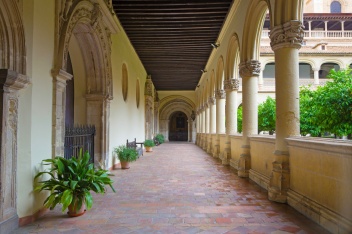
The urban morphology of the two small cities of Úbeda and Baeza in southern Spain dates back to the Moorish ninth century and to the Reconquista in the 13th century. An important development took place in the 16th century, when the cities were subject to renovation along the lines of the emerging Renaissance.

Playa Serena Golf Club

A mature and excellently maintained course, opened in 1979, it is one of the flattest in the country. It has wide fairways and the small, sloping greens are well protected by bunkers. The prevailing winds can present difficulties and no fewer than 12 of the holes have some tricky areas of rough and many water hazards.

Playa Macenas Golf Resort

Natural hazards as well as artificial ones are brought into play in the unique layout of this course. Suitable for all handicaps, it is stimulating and challenging, requiring concentration but very rewarding for good shots. The ample greens have a selection of pin positions.

Turrillas

Turrillas is situated next to the Parque Natural de Sierra Alhamilla, one of the most beautiful protected areas in Andalucía. At the entrance to Turrillas, close to the small chapel dedicated to San Antonio, is an amazing viewpoint where visitors can soak up the striking landscapes. The town has about 240 inhabitants.

Velefique

Velefique is home to the remains of a castle built by the Moors on a hill to the east. Take a walk around the outskirts through forest paths to the Tetica de Bacares, located at 3,000m altitude. It has about 240 inhabitants.

Uleila del Campo

Uleila del Campo is famous for the delicious cheese that is produced locally by the Quesos Monteagud factory. The Museo del Esparto and Museo de La Tejera offer valuable insights into the town’s agricultural history. It has about 830 inhabitants.

History of Pulianas

The origins of Pulianas date back to the Roman period. Archaeological remains indicate it was established as one of numerous agricultural villages near Granada. Historians believe the municipality’s name may have two origins: Arabic and Roman. According to Seco de Lucena (19th century Spanish writer, journalist, lawyer and politician), in Muslim times, it was named Bulyana. This title was found in the Ihäta fi ajbär Garnäta by Ibn Al-Jatib (14th century influential cultural figure, historian and politician), which cites it as qaryät bulyäna. The opinion that the name is of Roman origin comes from the fact there is no direct Arabic meaning for the word Bulyana. This led to the conclusion, as with many others in the toponymy of Al- Andalus, that the name has an external, possibly Roman, origin.

Festivals in Pulianas

Popular festivals in Pulianas are Cabalgata Reyes Magos, La Candelaria, Carnaval, Jueves Lardero, Semana Santa, May Crosses and Fiestas Patronales en Honor a Nuestra Señora de los Remedios y del Rosario