Gibraltar Airport History

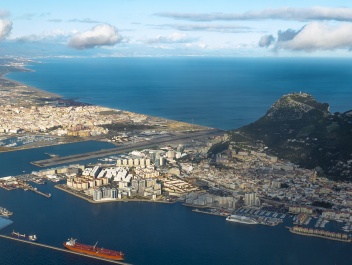
The runway was first established during the Second World War on the southern half of the 'neutral zone'. During the sieges this had been an un-demarcated strip of sand on the isthmus separating the British and Spanish lines of fortifications. It was said to be the distance of a canon ball's range. In 1813 it was used by Gibraltar as a Yellow fever encampment. In 1909 the British erected a fence and gate half way along. Between the world-wars Gibraltar marked out a horse-racing track.

History

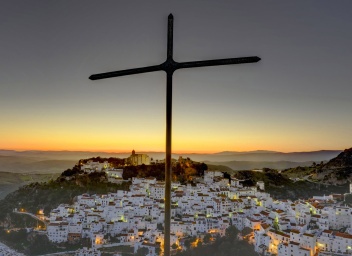
The town's magnificent castle, now called Castillo del Aguila (Eagle's Castle), dates from Roman times, although earlier Iberian ceramics have been found in its water tank. The castle was expanded by the Visigoths and then further extended by the Arabs into a fortress, after the Moors invaded in 714.

Malaga Airport History

The history of the Málaga-Costa del Sol International Airport is a story well worth telling. And it all began with an intrepid French engineer and entrepreneur Pierre-Georges Latécoère, considered by many to be the trailblazer that eventually led to the creation of Air France.

History

Jerez de la Frontera dates from Phoenician times, but first rose to prominence under the Moors, who called it Xerix or Sherrich ‘De la Frontera’. These names refer to Jerez’s position on the frontier of Moorish Spain, and the Alcazar (fortress) is a reminder of the town’s strategic importance.

History of Estepona

In Estepona various tools have been found made from local flint or quartzite using methods attributed to the Neanderthal era. Since we know the now-extinct Neanderthals lived in Gorham's cave in Gibraltar it raises the possibility that 30,000 years ago they were the first human (or at least humans' relatives) inhabitants of Estepona. These tools have been found in the Corominas and at Arroyo Vaquero.

Tourist Office

The tourist office of La Calahorra is located in the Town Hall.

Weather Forecast

If you are considering visiting this town you will be interested to check the latest weather forecast for the next few days from the table below.

Festivals

Popular festivals in La Calahorra are Fiestas de San Antón, Fiestas de San José, San Marcos, Fiesta de San Gregorio Nacianceno and Día de la Raza.

Bus Service

There is a bus service from La Calahorra to Granada City using the bus company, BAM.

Castillo de Calahorra

It is believed that the castle was built by a Moorish king on the site of an ancient fortification, which may have been erected during the Visigothic period and renovated during the Muslim occupation.

History

There is evidence that human settlements existed in La Calahorra and the Marquesado region during the Neolithic period. Bronze Age sites belonging to the El Argar culture have also been documented in the Marquesado del Zenete area, most notably at El Zabelí in Esfiliana

Tourist Office

The tourist office of Jérez del Marquesado is located in the Town Hall.

Weather Forecast

If you are considering visiting this town you will be interested to check the latest weather forecast for the next few days from the table below.

Festivals

Popular festivals in Jérez del Marquesado are Fiestas de San Antón, Candelaria, San Marcos, San Juan and Fiestas de la Virgen de la Tizná.

Bus Service

There is a bus service from Jérez del Marquesado to Granada City using the bus company, BAM.

Minas de Constanza

The abandoned mines date back to the nineteenth century, as does the Regas mill, which is still in operation today.

Torre de Alcázar

The earliest written references to a fortress in Jerez (al-Qasr Sened) date back to the 12th century. In 1125, Alfonso "El Batallador" arrived, causing great destruction to the nearby towns.