Alhambra of Granada
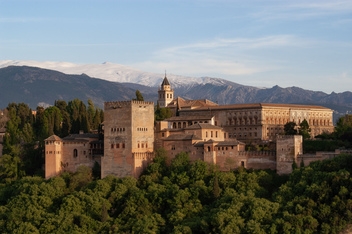
Granada´s most emblematic landmark, this historical fortress gets its name from the reddish hue of its hilltop walls on La Sabica that turn gold in sunlight.
Granada´s most emblematic landmark, this historical fortress gets its name from the reddish hue of its hilltop walls on La Sabica that turn gold in sunlight.
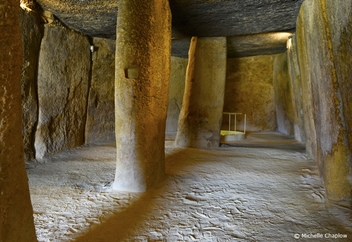
Andalucía is home to some of the most significant prehistoric monuments in Europe, particularly the UNESCO World Heritage site of the Antequera Dolmens and the Copper Age settlements of Almería and Huelva.
Andalucían church architecture is a rich tapestry of Roman, Moorish, Gothic, and Baroque influences. Beyond the main altar, these structures contain many specialized sections and decorative features.
This is an explanation of the terms used on signboards outside churches and monuments all around Andalusia, including types of churches, interior layouts, decorative features, and architectural styles.
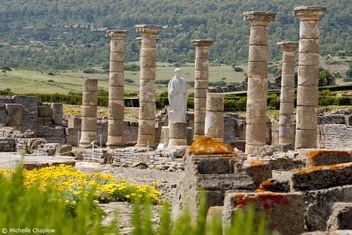
When the Romans invaded in the 1st century AD they proceeded to build whole towns and innumerable monuments, as well as roads, bridges and aqueducts. The two significant characteristics of their architecture are the arch and the dome, along with the sense of space and grandeur.
The mudéjar style of architecture emerged in Andalucía during the 12th century as Romanesque, with its close links to France and Italy, spread through northern and central Spain. The style, unique to southern Spain and lasting into the 16th century, flourished in each region as it was reconquered by the Christians.
There is much illustrated information available in museums throughout Andalucía about the life and culture of prehistoric man. This has generally been pieced together through archaeological discoveries of their tools and household goods; but of prehistoric architecture little remains.
Classic Gothic architecture, overlapping with the mudéjar style, spread through Andalucía from the 14th century with the Reconquest. As the Christians recovered the towns and cities there was a big movement to build churches. The design is characterised by vertical lines, lofty pointed arches and high ceilings.
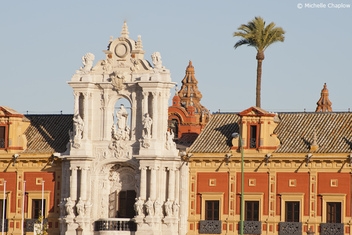
Baroque and Neoclassic architecture was prominent in Spain between the late 17th and mid 18th Century. These two styles were not as influenced by the Muslim world as the majority of Andalucian architectural styles. Baroque dates back to the late 17th century and reached a peak in the 18th century. Andalusia was one of the places where Baroque blossomed most brilliantly.
Baroque dates back to the late 17th century and reached a peak in the 18th century. Andalusia was one of the places where Baroque blossomed most brilliantly.
The horseshoe arch, first seen in small churches erected by the Visigoths, was developed by the Moors and became the hallmark of their architecture; the Grand Mosque in Córdoba being the classic and most well known example. Other design characteristics brought from Syria by the Umayyads in the 8th century were plant motifs and decorative inscriptions of calligraphy running horizontally across walls or around doorways.
From the cities to the sierras, the rolling inland plains to its long and varied coastline, Andalucía has a wealth of architecture. In prehistoric times the early inhabitants of Andalucía moved great boulders to shelter their dead. Great Roman cities and roads strode across the region, eventually paving the way for Al-Andalus and nearly eight centuries of unparalleled Moorish urban and agricultural construction.
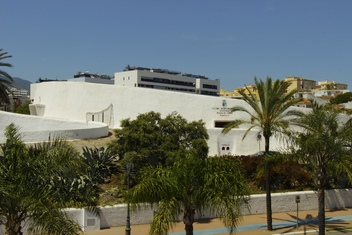
The bullring dates back to 1972 and, from within, resembles the typical concrete architecture of this era. From the outside it is more interesting, due to the unique asymmetric design created by Juan Moro Urbano, the exterior is landscaped to allow access to the upper terraces without the necessity of steps.
The Balneario de la Palma - La Palma Spa has been an emblematic building on La Caleta Beach in Cadiz since it was opened in 1926. After a chequered history the building now serves as a government administration office.