Pueblos Blancos Music Festival 2017
The second edition of the grass roots Pueblos Blancos Music Festival which held first edition in 2016, returned on weekend 7, 8, 9 and 10th September 2017 to the Serrania de Ronda.
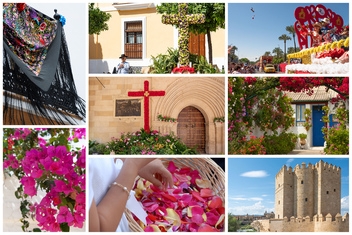
Popular festivals in Úbeda are la Fiesta del Corpus Cristi or las Cruces de Mayo
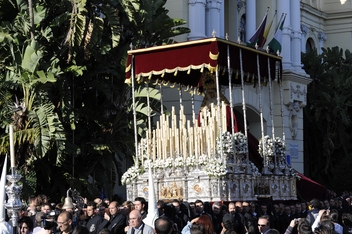
In 1993, a young woman from the village of Luque in Cordoba had the idea of creating an hermandad (church brotherhood which goes out in a procession in Holy Week) specifically for women. The woman confided her idea to a group of friends, and one year later in 1994, the project of the first female brotherhood was founded - Nuestra Señora del Mayor Dolor. Spanish does not have a female equivalent of the word brotherhood, for women (sisterhood might be hermanadad).
The “Romería Nacional de los Gitanos”, or National Gypsy Pilgrimage” traditionally takes place the third Sunday in June and attracts not only gypsies, but also “gachos” (non-gypsies). In fact, this event which was founded in 1969 by Jose Córdoba Reyes, draws participants from across Andalucia.
Every year the beaches of Sanlucar de Barrameda in the province of Cádiz come alive with the pounding of hooves as the famous horse races take over the coast. Traditionally, the races take place the second and fourth weeks of August from Friday to Sunday. The schedule also depends on the tide times so they might come foward a week.
In Spain, the equivalent of All Fools' Day is “Día de los Santos Inocentes”, which takes place in the middle of the long Christmas season (Spanish Navidad runs all the way through to 6 January, the Epiphany). On 28 December it’s your turn to play your favourite jokes on friends and family!
On 1 November, Tosantos (a contraction of todos los santos, or "all the saints") is celebrated throughout Andalucia, particularly in the villages of Cadiz and Malaga. It is traditional to visit the cemetery and place flowers or light candles on the graves of departed loved ones.
Several villages though-out the municipality of Vélez-Málaga celebrate the Virgen del Carmen, patron saint of fishermen day. On July 16th you will find processions over both land and out into the sea in Torre del Mar (in the Las Melosas neighbourhood), Caleta de Vélez, Benajarafe and Almayate.
Religious icons are hugely popular in Andalucia; they are normally handcrafted from wood and porcelain and spend 99.9 per cent of the year in glass-covered alcoves at the local church. Most are dusted down and placed on flower-decked thrones at Easter-time when they are lovingly and solemnly borne through the streets. The Virgen del Carmen, however, has her own special day.
December 28th, right smack in the middle of the Spanish Christmas season, we have the annual Verdiales competitions taking place right outside Málaga City. The festival will bring together competing “pandas” as they are known. These are groups that practice one of three different forms of Verdiales singing accompanied by their traditional folk dance and unforgettable costumes.
See the 2022 poster. Each June, the annual Malaga Feria poster is presented. A panel selects five finalists of which the winner is chosen by a popular online vote by Malaga residents.
A successful inaugural edition of this Andalucia tourist board sponsored event took place in 2022 at the Feria (Fairground) west of city centre in Málaga from Thursday 8th to Saturday 10th September 2022. This inaugural edition attracted about 100.000 over the three days to the three stage 50.000 m2 arena.
Possibly you thought the Christmas season was over on New Year’s Eve, but in Spain this is just the mid-point of all the celebrating. In this country, the tradition is to have a rather late dinner with your family – just one more rich, elaborate dinner, of course, complete with all the pastries, dried fruits and nuts and mountains of turrón that finish every meal at this time of year.
On 11th November, is the occasion for the slaughtering of pigs, in preparation for the winter-time drying of hams and sausages, at a fiesta called la matanza - literally, the killing - in all the towns and villages of the mountain areas of Andalucia.
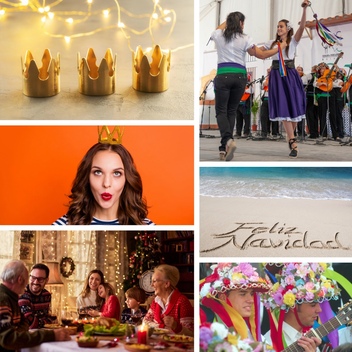
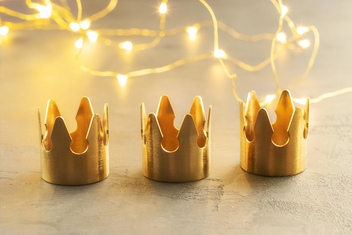
There is quite a debate across Spain regarding whether Santa Claus is displacing the traditional Three Kings at Christmastime in Spain. The truth is that Santa Claus is becoming more and more common, but even families that sign up with “Papa Noel” usually keep their accounts open with the Kings.
Here are some of the most popular festivals in Carratraca.
Cabalgata Reyes Magos
The traditional Cabalgata de los Reyes Magos (Three Kings Parade) is celebrated on 5th January. The procession of decorated floats sets off from the Plaza de la Cultura and winds its way through the village’s main streets.
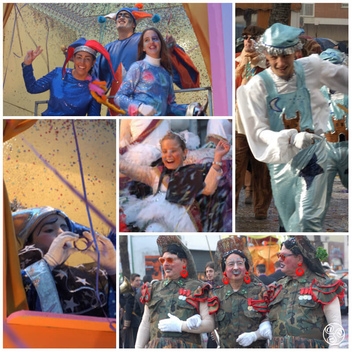
Carnavales
Carnival is celebrated in February.
Semana Santa
Holy Week processions, dates can vary.
Fiesta de la Virgen de la Encarnación
Fiesta de la Virgen de la Encarnación is celebrated the last Sunday of March.
Popular festivals in Jódar: Cabalgata Reyes Magos
The Three Kings procession is celebrated on the evening of 5th January.
Lumbres de San Antón
Lumbres de San Antón are celebrated the 17th January.