Latest Pages

Latest pages

We are committed to updating our pages as regularly as possible, allocating over half of our editorial resources to this essential task, to ensure that you can always find the latest, most reliable information on popular topics and places.

Here is a list with the latest pages that have been updated or created. Most recent are at the top of the list.
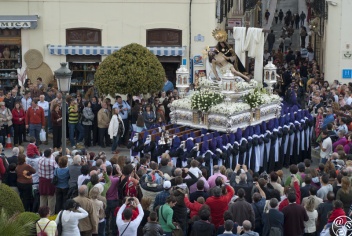
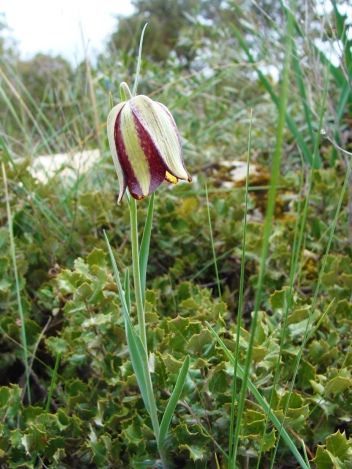
Castilleja de Guzmán

Castilleja de Guzmán as an agricultural village achieved great importance during Moorish reign, so much so that Commander Almanzor resided here. It has about 2800 inhabitants.

Bollullos de la Mitación

Bollullos de la Mitación has one of the most interesting artistic features of the town hidden away in the Capilla de San Martín de Tours (chapel). It has about 10,300 inhabitants.

Castilleja de la Cuesta

Castilleja de la Cuesta has always been specifically well known for the production of homemade desserts but more recently has become a large retail town. It has about 17, 500 inhabitants.

Bormujos

Bormujos is an agricultural suburban town of Seville, inhabited by many who look to live outside the city but close enough to commute to the centre for work. It has about 21,400 inhabitants.

Aznalcázar

Aznalcázar is one of the thirteen villages located within the Doñana National Park. It has about 4400 inhabitants.

Espartinas

Espartinas has a unique appreciation for bulls and religion, hosting the Exposición Nacional de Escultura Religiosa (National Religious Sculpture Exhibition) every November and the many bullfights that take place each spring. Every year on the 8 September (day of the patron of Ajarafe), the Air Force put on an acrobatic aerial display. It has about 15, 000 inhabitants.

Castilleja del Campo

The roots of Castilleja del Campo, as shown by the tombs, mosaics and clay work found in the area, stem from the Roman era. This town was also a key defensive point during the Christian raids in the Muslim period.

Almensilla

Almensilla was built over farmland that, in the Middle Ages, was converted into a hamlet belonging to Palomares del Río. It has about 5900 inhabitants.

Carrión de los Céspedes

Carrión de los Céspedes was created where an old Arabic farming town once existed and so this could be the reason that half of the working population are involved in the agriculture business. One of the monuments worth seeing is the Ermita de Nuestra Señora de la Consolación – a neoclassical construction from the 17th century that had to be reconstructed after the Lisbon earthquake in 1755.

Benacazón

Benacazón is a diverse agricultural village producing olives, fruits, specifically cherries orchards, as well as being known for its good quality beef. It has about 7000 inhabitants.

Semana Santa - Hotels for Semana Santa in Seville

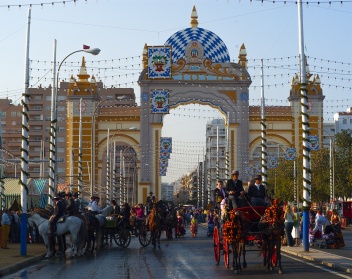
Semana Santa is one of the most popular times to visit Seville, as people arrive to experience the mystical Holy Week processions, with their mournful brass bands, lifelike statues of Jesus and the Virgin Mary, swaying rhythmically in the candlelight, accompanied by startling hooded figures.

Triana district of Seville city

Famous for having its own strong identity - it's known in Seville as "the independent republic of Triana" - this district is celebrated for its azulejos (ceramic tiles), made in workshops here originally using mud from the river bank; its sailors, bullfighters and flamenco artists.

Macarena district of Seville City

Next to the Alameda, this is an authentic Seville barrio; although many houses have been restored and smartened up in recent years to attract young professional types, thankfully it hasn't gone too chi-chi. You'll find trendy clothes shops, of the street-style skateboarder variety, as well as artists' communities. The food market on Calle Feria is one of the city's best and the "El Jueves" Thursday flea market is fun for bargain-hunting. The area is home to one of Seville's two favourite Virgins, the Virgen de Esperanza, a focus of intense adoration during Semana Santa.

Seville City Centre

This area is between Plaza de Encarnacion and Plaza Nueva, and its main attraction is the shopping zone around calles Sierpes, Cuna and Velazquez/Tetuan. Come here to find excellent quality Spanish-made leather shoes, boots and bags, as well as the traditional fans and embroidered shawls - or just do as the locals do, and walk around browsing and discussing, before stopping for a coffee. Zara and Mango abound; other fashion chains include Blanco, Pull & Bear and Sfera.

Barrio Santa Cruz, district of Seville city

This is the first barrio (area or neighbourhood) tourists head for, and with good reason. It is the most picturesque and delightful part of the city, with narrow winding cobbled streets and whitewashed houses, where you can sit outside a bar, enjoy some tapas and watch the world go by, or wander through centuries-old gardens and relax on beautiful tiled benches.

The Arenal district, Seville

Tucked in between Avenida de la Constitucion and the river, El Arenal was home to the city's port, from where ships sailed to the New World - hence its name, from arena (sand), on the then-tidal river banks. These days, it's a well-heeled barrio with abacerias (shops selling conservas, tins and jars of food, and cheese), freidurias (fried fish takeways) and, as well as some good bars and restaurants.

Costa del Sol Beaches

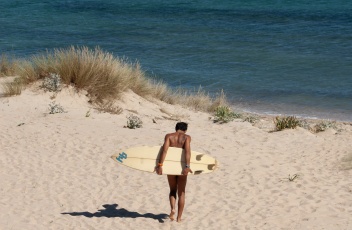
Explore the beaches of the Costa del Sol from West to East using our comprehensive guide. Costa del Sol is the most developed part of the Coast. The Mediterranean water is warm and safe. Many towns have recently modernised "paseo maritimos" (promenades). Most locations are backed by development.

Los Monteros beach

Los Monteros beach is situated next to Hotel Los Monteros and the Urbanization Bahia de Marbella part of Urbanizacion Los Monteros. It is a large beach; 2km long but quite narrow in places. Playa Los Monteros is a relatively quiet beach; it is a fine sandy and pebble free beach and the sea shore is quite shallow.

Beach Rules

In 1982 the Direction General de Puertos y Costas (a national agency to oversee ports and coastline) ruled that all beaches in Spain should be public and removed the concept of a private beach. The laws relating to what you can and can not do on the beach stem from the 1988 and 2014 Ley de Costas which defines the public nature of the beach that can not be sealed of off for a private use.