|
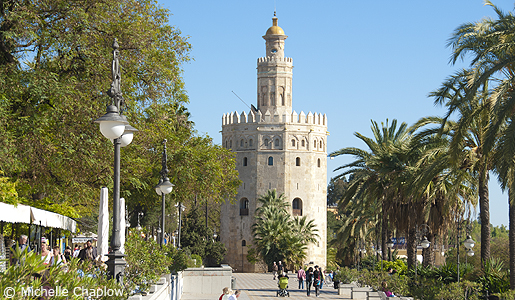
| The Torre del Oro (Golden Tower), which dominates the banks of the river Guadalquivir. |
Top 10 things to see and do in Seville
As the capital of Andalucia, Seville has a wealth of history, culture and gastronomy to offer. From Roman and Moorish delights to contemporary architecture and interactive museums, you'll have plenty to keep you busy on your visit to La Hispalense. Whether you're visiting for Semana Santa - in which case beware, as many of these places are closed that week - or Feria, or another time, here is our list of top 10 of things to see and do in Sevilla.

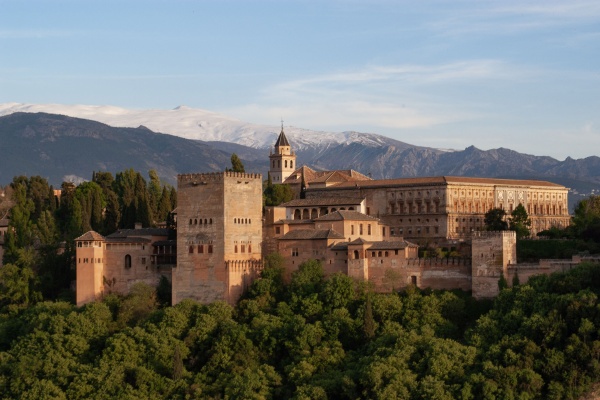
The Alcázar Réal (Royal Palace) of Seville is one of the city’s most enchanting, and most popular, historic monuments. Along with the Cathedral and Archive of the Indies, it is recognised as… More →
The cathedral's construction lasted over a century, from 1401 to 1506. It is said that when the plans were drawn up, church elders stated, "Hagamos una iglesia tan hermosa y tan… More →
Together these three buildings form a remarkable monumental complex in the heart of Seville. The cathedral and the Alcázar - dating from the Reconquest of 1248 to the 16th century and imbued with… More →
For many visitors to Seville, flamenco is one of its greatest treasures. People flock to the many tablaos (flamenco bars) and flamenco shows to see a little of this Andalucían culture while… More →
The Archivo General de Indias is situated next to the Cathedral, on Avenida de la Constitucion. This 16th-century building houses 80 million pages of documents and maps about the Indies (9km of… More →
The Torre del Oro (Golden Tower), which dominates the banks of the river Guadalquivir next to the Puente San Telmo, is a remnant of the Moorish fortified walls which originally enclosed the city,… More →
The Parque Maria Luisa is a large green space to the south of the city centre, close to the river, with hundreds of exotic trees lining shady avenues, and historic, fairytale buildings, with… More →
This is the first barrio (area or neighbourhood) tourists head for, and with good reason. The Barrio Santa Cruz is the most picturesque and delightful part of the city, with narrow winding cobbled… More →
La Casa de Pilatos (Pilate's House) is the finest example of a civil (as opposed to royal) palace in Seville. The building is a mixture of Italian Renaissance and Spanish Mudéjar adorned with… More →
Roman ruins of Italica, near Seville, with remarkable mosaics and an impressive amphitheatre, are located 9 kilometres to the north of the city, just outside the village of Santiponce. Nearby you… More →
This massive building is Seville's most impressive after the cathedral, for its sheer scale and grandeur. Love it or hate it - fabulous or fussy, magnificent or overblown, depending on your point… More →
Famous for having its own strong identity - it's known in Seville as "the independent republic of Triana" - this district is celebrated for its azulejos (ceramic tiles), made in workshops here… More →
This large, walled complex of honey-coloured stone buildings, situated on the Isla la Cartuja (named after the monastery itself; the word means “charterhouse”), has seen many ups and downs during… More →
Las Setas (the Mushrooms), named due to its short pillars and broad shades, is the most ambitious, expensive and controversial urban project in Seville since Expo 92. Opened in 2011, and designed… More →
The Duquesa de Alba was one of Spain's most famous aristocrats, and one of Seville best-loved personalities, until her death in 2014. With palaces and castles all over Spain, Cayetana was happiest… More →
In 1519 Portuguese explorer Ferdinand Magellan set sail from Seville with a fleet of five naos (carracks or carvel-built wooden sailing ships) to find the Molluca spice islands, in modern-day… More →
