 Cuevas de los Letreros
Rock art in Almeria, granada and Jaen - Unesco World Heretige sites
Categories Rock art, archaeological site (added to list in: 1998)
68 separate cave paintings in Velez-Blanco and Maria, Almeria; Almaciles and Huescar, Granada, Quesada, Pontones, Santiago de la Espada, Segura de la Sierra, Santisteban del Puerto and Aldeaquemada, Jaen.
What UNESCO says: "The late prehistoric rock-art sites of the Mediterranean seaboard of the Iberian peninsula form an exceptionally large group. Here the way of life during a critical phase of human development is vividly and graphically depicted in paintings whose style and subject matter are unique."
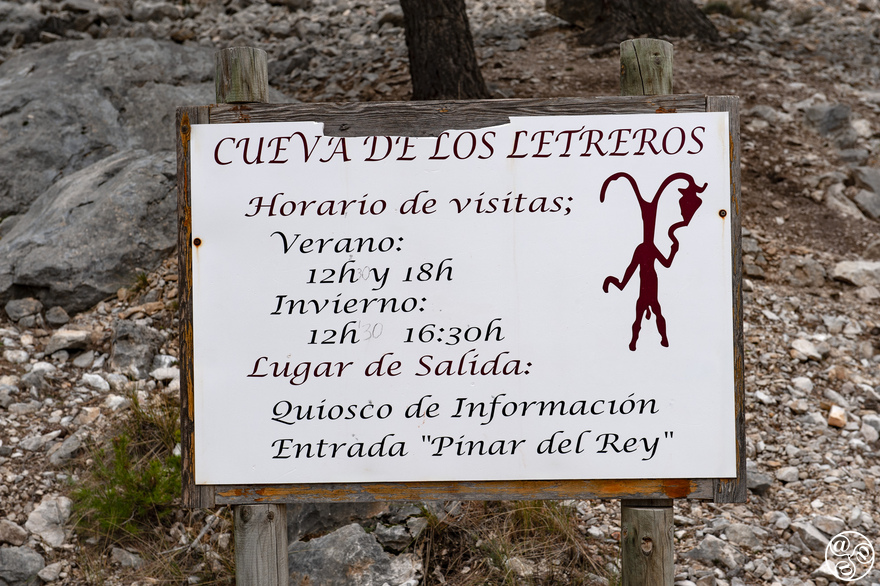
What there is to see: Cueva de los Letreros in Velez-Blanco (Almeria) has 6,000-year-old paintings of animals, birds, symbols and human figures. This is where the "indalo", the stick man holding an arc over his head, used as Almeria province's symbol, was found. La Cueva del Gabar is nearby, but has difficult access and must be visited with a guide. Sadly, the local practice of throwing water on the paintings to bring out their colours has not helped their preservation.
Andalucia has seven World Heritage Sites
Andalucia has seven World Heritage Sites: the Alhambra, the Generalife and the Albayzín in Granada; the Cathedral, the Alcázar and the Archivo de Indias in Seville; the historic city centre of Córdoba (including the Mezquita); the Renaissance monumental ensembles of Úbeda and Baeza; and 68 items of cave art in the provinces of Almería, Granada and Jaén, which are included in the Rock Art of the Mediterranean Basin, as well as Madinat al-Zahra. The natural World Heritage Sites are the Doñana National Park in the province of Huelva and the Antequera Dolmens in the province of Málaga. The Gorham's Cave Complex is located on the Rock of Gibraltar.