Latest Pages

Latest pages

We are committed to updating our pages as regularly as possible, allocating over half of our editorial resources to this essential task, to ensure that you can always find the latest, most reliable information on popular topics and places.

Here is a list with the latest pages that have been updated or created. Most recent are at the top of the list.
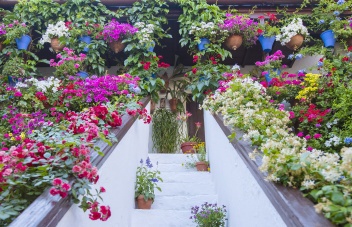
Flagellation Chapel

Casa de Pilatos, like many palaces, has its own chapel. The oldest room in the palace, this has both Muslim and Christian elements, with a wide entrance arch finely decorated with Mudejar plasterwork. It has the only tile skirting board in the palace, and one of a few in Seville made using the cuerda seca (dry string) technique.

Caixa Forum

Located next to Andalucia's first skyscraper, the 180m-Torre Sevilla (known locally as Torre Pelli), CaixaForum Sevilla covers 8,100m2, consisting of two exhibition halls, an auditorium, two multi-use rooms, a Kids Zone room for children's activities, a shop, and a café-restaurant with outdoor terrace.

Palacio de Lebrija

One of the least known of Seville’s museums, this is a family palace with a wonderfully varied private collection. It is situated at the Campana end of Calle Cuna, parallel to Calle Sierpes. Look out for the impressive but discreet stone doorway (there is no obvious sign) and huge wooden doors.

Seville Gate

The Gate of Seville is of considerable historical interest standing as an original fortified tower and an early entry gate to the Alcazar or fortress from the west. Fragments date back to the 10th century. The wall here was erected by Christians in the 14th and 15th century along with the barbican and moat.

Plaza del Potro

Just a few minutes away from the Mezquita, to the east along calle Luis de la Cerda/Lineros, is the Plaza del Potro (Square of the Colt), a long, rectangular square which slopes down towards the nearby Guadalquivir river to the south. It is named after the 16th-century fountain in the plaza (1577).

Palacio de Viana

This Palace, which was declared a National Monument and important Artistic Garden, has a surface of 6,500 m2, more than half of which is occupied by the garden and the rest by a building with two floors and two little entresols.

City Walls

The walls which used to mark the boundaries of the Jewish quarter extended virtually to the Arab walls. The latter enclose the Alcazar gardens and continue along the river bank. These stretches of wall are among the better conserved in the city's fortified enclosure, although they are from a later period.

Aljibes Árabes

During the Muslin era, Almeria did not have a water supply network for buildings, making it necessary to build bathing areas and washing fountains. We have news of the water supply to Almeria mainly thanks to al-Himyari and al-Udri. According to al-Himyari, Jairán during his reign (1012-1028) was the one who ordered the construction of the water pipeline, and according to al-Udri, it was during the reign of his successor Zuhayr (1028-1038). In any case, they are traditionally known as Aljibes de Jairán.

Conservatorio de Música

The Conservatorio  Profesional de Música de Huelva "Javier Perianes" is a music centre dedicated to teaching as well as holding musical performances. It was inaugurated by the class of 1986/1987 with a very small faculty of teachers as well as a small number of students not exceeding 86.

Iglesia de San Pedro

Huelva's oldest parish church, the Iglesia de San Pedro, was constructed in the 15th and 16th centuries on a hilltop site of a mosque and next to the remains of a medieval fortress. It faces a pleasant palm tree-lined square, the Plaza San Pedro.

Plaza de Toros

The Plaza de Toros de la Merced (bullring) was built from 1901-1902 and commissioned by architect, Trinidad Gallego Díaz, who was inspired by the bullring in Madrid, known as "the one on Calle Aragon".

Casa Colon

A symbol of British power in late 19th-century Huelva, the Casa Colón is the grandest of all the buildings constructed by the city's bourgeoisie around the same time. It is an imposing presence at the beginning of the Alameda Sundheim, with a terracotta façade and ornate wrought-iron balconies.

Iglesia Santa Maria La Mayor

This church’s construction began in 1467 and continued until 1624. Of Gothic origin, it has a hall plan with three naves, with ribbed vaults at the feet. During the sixteenth century, its robust tower, made of brick and Mudejar decoration, began to be erected.

Iglesia de Santa Marina

The eighth-century church is the oldest temple in the city, built on a mosque and commemorating the day that Fernando III entered Andújar. Originally built in the Gothic style, it underwent important transformations in the first half of the seventeenth century.

Puente Romano

The roman bridge was built at the beginning of the second century AD, in the time of Septimio Severo Pío, according to the inscription that appears on a broken tombstone of the bridge, found during works in the nineteenth century.

Theme Parks in Andalucia

Whether you´re visiting Andalucia on holiday are looking for a change of scene from the beach for a day, or you live here and you want to take your child somewhere where they can learn about the culture and history of the region, Andalucia´s theme parks encompass movies, science and history, making education fun for children of all ages - not forgetting those ever-popular, heart-in-your-mouth, upside-down rides, of course.

Wildlife Parks

In Andalucia we can find many different wildlife Parks. Most of them are Zoos such as Zoo Castellar NaturaParc, Fuengirola BioParc or Selwo Adventure Park, where you can enjoy a nice day and view a huge range of animals, birds and other species from around the world.

Karting

There are many karting circuits in Andalucia where you can have fun. They can be found at Campillos, La Puebla de Cazalla, Cartaya, Torre del Mar.